Monday, January 21, 2013

Fiscal Conservatism

Its quite true that the United States government and indeed many governments are spending simply too much money these days.  What both parties do not understand is that they are both to blame.

We need serious entitlement reform.  We also need to make sure that we aren't spending so much money on foreign wars.  A huge amount of money could be saved by engaging in serious entitlement reform and increasing the efficiency of how the military-industrial complex uses its money.


Sunday, January 20, 2013

True Conservatism

We could use some true conservatism on the part of the Republican parties these days, and with a radical change to be more conservative, the GOP might gain some votes.

Being a conservative means thinking before acting.  It means conserving our resources-monetary and environmentally.  Spending less money and eliminating waste when possible is a very smart thing to do in government, though many "conservatives" are still content to spend on foreign wars and on pork in their districts.


Being a conservative also means conserving the environment.  Making sure through careful stewardship that our natural resources and parks are still there for our children.


Wednesday, January 9, 2013

Education Reform

As we make several posts on education reform, we'd like to share some very informative videos and articles that share interesting and different perspectives on education.  These varying perspectives are essential in revolutionizing our education system and adapting it for the 21st century.  Today, we'll share some clips of Salman Khan the man who founded Khan Academy.


Posted by ReasonTV, Khan talks about education reform in our country and how we can restructure the education system.  Early on, he advocates paying teachers more, establishing teaching as a profession on par of highly-trained doctors.  He feels the country needs to change to dynamic in the classroom and the teaching profession.

Below is a nice 60 Minutes piece complied by CBS.  It details the specifics of Khan Academy and how it can change education.


By creating videos such as this, Khan is effectively using technology to further education.  While technology used ineffectively can certainly stall student learning, there are many situations when technology can prove effective.  This is one of those cases.

Additionally, here is an interesting video put together by edutopia with more information on Khan and his creation, as well as his views on how it can be used.


Tuesday, January 8, 2013

Education Reform: The Problem

As many education reform proponents say, the difference between a good teacher and a bad teacher is vast.  A fantastic teacher can cover loads of material and inspire kids to become world leaders, while bad teachers can bring down an entire class, causing students to be ill-prepared for their ongoing education.  Eric Hanushek, a Stanford economist, contends that on average, good teachers cover a year and a half's worth of material as opposed to half a year for bad teachers.  This is one whole year's difference, and when tabulated cumulatively, can result in huge gaps in learning.

The problem then, is to find ways to get good teachers.  This is obviously easier said than done.  It is often not apparent that a bad teacher is bad until the teacher is already behind in the material.  Test scores can be used to track teachers, but it requires large sample sizes, with scores taken over many years, to get anything close to a clear picture of teacher performance.  The thing is, we want a way to quantify teacher success when there may not really be one.  A teacher that inspires his or her students to join a science summer camp would not have a measurable change in their student test score performance.  Good teachers also have intangibles, which are equally if not more important than testing performance.  Not having a clear way to distinguish a good teacher from a bad one is just part of the problem of our education sector.

If a teacher is considered bad, it is not always straightforward on how to get rid of them.  While some schools can certainly get rid of teachers, at others it is harder.  Powerful teaching unions, along with the use of tenure, have often been barriers to the removal of bad teachers, preventing better ones from being hired.

Money earmarked for education is also not always well spent.  Studies show that spending money on good teachers is more beneficial than classroom size changes.  This is a small example, but an example nonetheless of a situation where schools and educators must be aware of the economic impact of schooling.  Education is perhaps one of the most important services the government provides. We need to make sure that it is fiscally responsible in a way that it can continue.

Sunday, January 6, 2013

Fiscal Cliff Deal

While a deal has been reached in the fiscal cliff saga, the result is a disappointment. There was no grand bargain, which was unfortunate, though grand bargains are likely going to be hard to come by in the near future.  The deal basically kicks the can down the road, meaning congress will have to deal with the situation later, or kick the can further away.  Remember, the fiscal cliff was a creation of congress that delayed tough decisions.  This strategy has been the new norm for any debt related debates, leading to a stagnant reform effort.


Monday, December 17, 2012

President Obama's Address in Connecticut

In the midst of a horrific tragedy, we feel it is important to concentrate on the events that have happened in Connecticut.  Here are the President"s remarks:


Saturday, December 15, 2012

The Future of Gun Control

Many will call the events in Connecticut a tragic accident, or a horrible tragedy, but those descriptions are beating around the bush.  This was a senseless massacre of innocent life.  What makes it even worse is the fact that this is the 16th such mass shooting event in the United States this year.  Those 16 shootings have left 84 people dead.  The question is, how many more people must be brutally murdered before legislators do anything?

Shooting killed 26 people in Connecticut
The time has come for some sanity on gun control.  The facts show that more guns correlate with more homicides (Harvard School of Public Health), just as the fact that states that have tighter gun laws have fewer gun related deaths (Richard Florida).   We as a country need to stop lying to ourselves that guns make us safer and finally get some results in gun control to ensure the safety of our population and ensure that such terrible killings will not happen again.


Many would argue that the Constitution guarantees the right to bear arms.  However, the very same document we uphold to be the law of the land and the reason why gun control should not be enacted once contained provisions upholding the enslavement of human beings, counting African Americans as three-fifths of a person, didn't allow women to vote, and didn't allow direct election of officials even after a democratic revolution. 

Moreover, when the founding fathers wrote that United States citizens had a right to bear arms, they did not write a provision in the Bill of Rights that upheld the right to carry concealed weapons, have firearms with hundreds of rounds of ammunition, wear body armor, and shoot up a crowded elementary school.  The wide availability to guns that people now have in this country creates an environment that violates the basic tenant that our government is supposed to enforce: keep our citizens safe.


We urge  everyone to write to their representative and Senator to spur action on this particular issue.  We cannot afford to wait for the next tragedy for us to be influenced into action. 

Friday, December 14, 2012

Simple Graphic Explaining Fiscal Cliff

USA Today put together an amazing graphic explaining the fiscal cliff.  we encourage any curious minds to take a look:


Thursday, December 13, 2012

An Open Letter to Speaker John Boehner


Speaker Boehner, 

As our nation rests on the perilous brink of insolvency, the Government of the United States needs to raise taxes, somehow, on individuals and companies, until the economy has achieved a strong growth rate for two consecutive years. 

The governmental debt of this great nation has ballooned to around 70% of our Gross Domestic Product, far above what is considered healthy for the economy.  We need a way to lower it.  Doing so would enable us to ensure the financial flexibility typical to a period of strong growth.  Keynesian Deficit spending is an option, but with an economy slowly rebounding, with unemployment now at 7.7%, we feel that it is time to address the debt problem.


In order to do this effectively and responsibly, we must employ a balanced approach.  According to the Congressional Budget Office, the well-regarded nonpartisan organization that provides economic data to congress, only raising taxes or only cutting spending could have drastic effects on the nation’s growth, crippling the economy here in the United States and sending ripple effects across the world. While cutting spending and increasing taxes would have some short term detrimental effects, it pales in comparison to the alternative proposals.

Therefore, there is a need for increased revenue.  The question remains: how do we get it?  Here, we must also look for a balanced approach.  The government, when seeking out ways to increase the amount of dollars going into the treasury, must look for ways to spread the load of tax increases, making sure those earning very little will not suffer any undue burden.

There are two ways to increase revenue-we can either raise the base rate that people pay or we can eliminate tax deductions.  A deduction is money that the government gives back to taxpayers for reasons varying from making a charitable donation to owning a private jet.  Now obviously, some deductions are more important than others.  By capping deductions, yet keeping the base rate the same, we can obtain revenue for the government.  In addition, by changing the tax code by including revenue from stocks and dividends in this new tax, which are now taxed lightly, for higher income earners will generate much needed revenue for the government and will cut into the debt. 

These tax increases, though levied on many Americans, would not affect all people equally.  Moreover, since richer people tend to have more deductions and more income from the stock market, the tax increase would be progressive.  This ensures equity and limits any economic damage that might occur.  The money gained can be used for targeted stimulus, or as we have been saying, to pay down the debt, ensuring a stable future for the United States economy.  


However, only capping deductions will not get us all the revenue we need.  In order for this plan to be truly balanced, we also need the people who can afford it the most to pay slightly higher rates on income taxes.  How much to change these is up in the air, but please ensure that tax increases are spread fairly on consumers and do not unduly burden the poor and the middle class. 

We should maintain there tax increases until necessary growth has occurred sustain a tax decrease.  When we have strong growth, the base will be large enough to finance a cut in taxes.  We need to get this debt problem under control.  Spending cuts, as well as tax increases, must be part of the plan to get this done.


Please communicate with the rest of your caucus that legitimate tax increases must be on the table.  Deductions, as well as base rate increases may be necessary to cut the debt.  Reforming the tax code, making it simpler and fairer can also help us in this problem.  You can push the President on spending cuts all you want, but a stronger plan, on that includes revenue, is necessary to ensure our nation's economic stability for the future.

The Auxilia Party

Tuesday, December 11, 2012

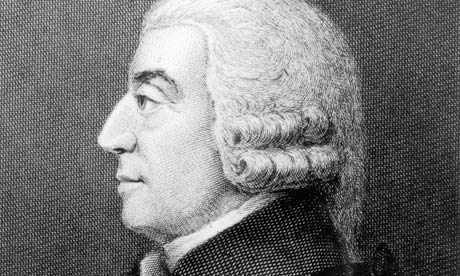
Adam Smith's Maxims of Taxation

In his book, The Wealth of Nations, economist Adam Smith, the father of capitalism, outlined four general principles, or maxims, that he thought ought to govern how governments levy, collect, and organize taxation in their countries.  Each of these maxims is extremely applicable today, and if we can learn about and start following these principles, we have found a perfect place to start for tax reform in the United States.


The first of Adam Smith's maxims is equity.  In Smith's view, since wealthy citizens benefit the most from government and are able to pay for it, the should shoulder a larger burden than others. "It is not very unreasonable that the rich should contribute to the public expense, not only in proportion to their revenue, but something more than that proportion."  Equity, in other words, means that the wealthier a person is, the more of their income they will pay in taxes.

The second maxim is certainty.  In Adam Smith's opinion, the taxes that a person owes should be certain and not arbitrary.  The amount to be paid, when it should be paid, and the manner the tax should be paid in must all be clear.  Without this, government officials could be tempted to abuse the tax system for their own personal gain.

Convenience is Adam Smith's third maxim.  Taxpayers, he thought, should be relatively easy to figure out and the tax code must not be overly complicated.  The process of paying taxes should be easy for citizens, as well as straightforward and predictable.

Adam Smith's fourth and final maxim is efficiency.  Efficiency means that the cost of the whole tax collection system needs to be kept to a minimum, otherwise there is little point of collecting a tax that requires so many resources to collect.  Taxation, Smith felt, should produce maximum gain for a government, while at the same time incurring minimal cost for the tax payers.

Clearly, the US government is not following these principles.  More often now, people are turning to professional help to complete their tax returns, in part because they are so inconvenient to do.


Below is a graphic that Neil Patel  from Quicksprout has put together, illustrating some problems with the tax code.


As you can see, the US government has a lot of work to do in tax reform.  If we can fix some of the problems with complexity and inefficiency, we can increase revenue without having to increase rates.  It's just one way we can help make this country more sustainable for the future.