Puerto Rico's status in the Unites States' political sphere is a bit complicated. It is considered a commonwealth, which means that the people of Puerto Rico are citizens of the United States but they do not have much say in the nation's government. This has led to questions over the years about what should be done about Puerto Rico, to the extent that there is a group of Puerto Ricans that want to reunite with Spain. While some still favor the status quo, others are proponents for statehood, and there has been some movement on that front in the form of a resolution in the Senate.
Many proponents for statehood cite the economic benefits associated with becoming a state, especially citing a recent GAO report that projects a favorable impact on the Puerto Rican economy if statehood is achieved. It also suggests that statehood is both in Puerto Rico's interests as well as the nation's interest, which has been a cause for worry in the past regarding Puerto Rico's status. The U.S. Government is constitutionally obligated to treat Puerto Rico with less priority that the states, and would have to sink more money into the State of Puerto Rico than they do the Commonwealth. However, the GAO report suggests that increased revenues from the state will ably make up for the extra dollars spent.
Economic benefits certainly are debatable, with some people drawing different conclusions from the same report, but Puerto Rico would likely be better off as a state in the United States rather than on their own, where they would have to pay for national defense and international diplomacy in addition to managing their own national economy. The independence question is something that both Catalonia and Scotland have considered in recent years. It would be a bit of a stretch to think that Puerto Rico would be better off on their own rather than aligned with the economy of the United States. It is likely that remaining with the United States as a state would either better protect, or at the very least not change Puerto Rico's propensity to economic fluctuation, since their economy is dependent substantially on oil for transportation and energy, as well as its dependence on imports. Puerto Rico has struggled to become fully self sufficient in its history, so enhancing ties with an economic power like the United States would seem to be in it's best interests.
Regardless of the economic situation, the people of Puerto Rico deserve to have something done about their future. Right now, though they are a United States Commonwealth, they cannot vote in presidential elections and do not have a voting member of congress (they do have one representative to serve their interests, but they are not able to vote).
Whether or not Puerto Rico should become a state is a question best left to the Puerto Rican people, but a decision should be made. Puerto Rico should not exist in a limbo where they are not independent or not represented in the government of their own country. It is in Puerto Rico's best interests to force this issue.
Adding Puerto Rico to the Union could influence the politics of the United States significantly, and this is possibly why there has to some resistance to decision making regarding Puerto Rico's status in Washington. Adding Puerto Rico as a state could well add two Democratic-leaning senators to the U.S. Congress, as well as some representatives, possibly taking representatives away from lower population right-leaning states. This leaves the Republican Party with little incentive, though the party's platform does support it, to initiate action towards Puerto Rico's admission into the Union as a state.
Irrespective of these effects, Puerto Rico's needs and accordingly, its politics, would affect how the national parties approach certain issues. Puerto Rico is different culturally and economically to the other 50 states. Namely, Puerto Ricans speak primarily Spanish, where the mainland obviously favors English.
These differences, however, could have a positive effect on the politics of our country. The nation's own demographics are changing, with many more Latinos than there were 20 years ago. Other immigrant groups are also on the rise. Adding Puerto Rico to the Union would add some diversity to our country, and hopefully force the political parties to cater to a diversifying nation. At the very least, it could provide some fresh blood and some new perspective to Washington, a city that badly needs some different opinions on how to run the country. Puerto Rico might give the United States that opportunity.

Showing posts with label United States. Show all posts
Showing posts with label United States. Show all posts
Sunday, June 15, 2014


Saturday, June 22, 2013
IRS Scandal and the Future of America's Least Favorite Institution
After the recent breaking news that the Internal Revenue Service was giving additional scrutiny to the tax exempt status of Tea Party Groups based on having words such as "Patriot" or "Tea Party" in their name, there was massive political outcry on both sides of the aisle, most of which was well warranted. Groups should not be targeted purely based on the name of their group. But to make the assumption that the IRS was completely uncalled for in it's extra scrutiny and purely based on targeting conservative groups is not.
According to a recent NPR report, many liberal groups with had missions or names having to do with "progressive" tendencies were also targeted to a significant extent by this IRS oversight. This means that the IRS blanket of these groups is not a mechanism of the party in the White House trying to delegitimize groups that should have non profit status.
But the larger issue that this scandal raises is the fallout and effect on the IRS's future policy. The political posturing that is taking place in Washington takes away from the fact that investigation and scrutiny is what the IRS was set up to provide. Rhetoric like that of John Boehner, who insisted that he was concerned with "who was going to jail" rather than who would resign in the wake of the scandal makes the situation even worse.
The result of this controversy will unfortunately make the IRS less likely to provide scrutiny where there should be, instead making them gun shy of political backlash. This spells bad news for rooting out organizations that really should have a little extra scrutiny in order to get non-profit status. The IRS clearly states that in order for organizations to receive a 501(c)4 charitable tax exemption, they need to have their activities be focused "exclusively to charitable, educational, or recreational purposes." (irs.gov) This means that in order for a group to get such an exemption, they cannot be focused primarily on political actions. Instead of giving these groups a rubber stamp, the IRS should be providing extra scrutiny to groups that have dubious charitable actions.
According to a recent NPR report, many liberal groups with had missions or names having to do with "progressive" tendencies were also targeted to a significant extent by this IRS oversight. This means that the IRS blanket of these groups is not a mechanism of the party in the White House trying to delegitimize groups that should have non profit status.
 |
| IRS Building in Washington (Washington Post) |
The result of this controversy will unfortunately make the IRS less likely to provide scrutiny where there should be, instead making them gun shy of political backlash. This spells bad news for rooting out organizations that really should have a little extra scrutiny in order to get non-profit status. The IRS clearly states that in order for organizations to receive a 501(c)4 charitable tax exemption, they need to have their activities be focused "exclusively to charitable, educational, or recreational purposes." (irs.gov) This means that in order for a group to get such an exemption, they cannot be focused primarily on political actions. Instead of giving these groups a rubber stamp, the IRS should be providing extra scrutiny to groups that have dubious charitable actions.
Wednesday, June 12, 2013
Government and Organized Labor
One of the signature political issues that divide the two political parties for a long time and continuing today is the role for government in managing organized labor. Last year, Wisconsin Governor Scott Walker faced a recall election after he took on public unions in the governmental workforce and received a huge backlash from the public sector. More recently, Michigan governor Rick Snyder signed into law a bill making Michigan the newest "right to work" state, following in the lead of states such as Indiana by preventing mandatory deductions from payroll to fund union activities. Opinions on both sides are charged, so it is important to get the facts right.
First, it is important to make clear the meaning of the law on face value, The bill does not, as the name might imply, that employees are guaranteed work in any way. The only thing it guarantees is that individual employees at a business or organization at which a union is present will not be required to join that union as a condition for joining the workforce and are not obligated to make payments to the union. Pro-business groups see this as allowing a more natural version of capitalism to let loose in the American economy, which will in turn loosen the regulations on corporations and create more jobs. Opponents to reductions in the power of labor see this as an unnecessary attack on the right of workers to organize and collectively bargain. If a company that has a union has no means to keep up the membership of the union, the union has the potential to lose members, and when it comes to organizing, the more people, the more power.
The issue of organized labor is complicated in America, since it is both a political and economic issue. As seen below, the majority of political donations by unions goes to Democratic candidates, and the majority of business donations go to Republican candidates, setting up a constant fight as either side plays politics to their base in order to get support during election season.

There is also an economic side to organized labor. According to the Bureau of Labor Statistics, for all major demographics, unionized workers on average earn more that non-unionized workers. This has been taken different ways, depending on what economic view economists subscribe to.

One school of thought says that the higher pay workers are and greater job security they have guaranteed by the union, the greater purchasing power they have and the more likely they are to spend it, since they are not as concerned about saving in the event that they loose their job. This means that more money is being pumped into the economy as consumer spending, which is approximately 70% of the US Gross Domestic Product (World Bank). Conversely, one can take the argument that unions raise labor costs and thus lower businesses ability to make profits.
I won't debate on what economic model is the most relevant, but consider this: Unions have had both an extremely beneficial impact in protecting individual workers, akin to protecting the American ideal of individualism, but have also expanded to have great power, which could result in not representing the interests of individual members. However, just as in elections, not everyone gets their first choice in everything.
I encourage you to look up the range of political views for yourself to be educated on this complicated and relevant issue in American politics today.
First, it is important to make clear the meaning of the law on face value, The bill does not, as the name might imply, that employees are guaranteed work in any way. The only thing it guarantees is that individual employees at a business or organization at which a union is present will not be required to join that union as a condition for joining the workforce and are not obligated to make payments to the union. Pro-business groups see this as allowing a more natural version of capitalism to let loose in the American economy, which will in turn loosen the regulations on corporations and create more jobs. Opponents to reductions in the power of labor see this as an unnecessary attack on the right of workers to organize and collectively bargain. If a company that has a union has no means to keep up the membership of the union, the union has the potential to lose members, and when it comes to organizing, the more people, the more power.
The issue of organized labor is complicated in America, since it is both a political and economic issue. As seen below, the majority of political donations by unions goes to Democratic candidates, and the majority of business donations go to Republican candidates, setting up a constant fight as either side plays politics to their base in order to get support during election season.

There is also an economic side to organized labor. According to the Bureau of Labor Statistics, for all major demographics, unionized workers on average earn more that non-unionized workers. This has been taken different ways, depending on what economic view economists subscribe to.

One school of thought says that the higher pay workers are and greater job security they have guaranteed by the union, the greater purchasing power they have and the more likely they are to spend it, since they are not as concerned about saving in the event that they loose their job. This means that more money is being pumped into the economy as consumer spending, which is approximately 70% of the US Gross Domestic Product (World Bank). Conversely, one can take the argument that unions raise labor costs and thus lower businesses ability to make profits.
I won't debate on what economic model is the most relevant, but consider this: Unions have had both an extremely beneficial impact in protecting individual workers, akin to protecting the American ideal of individualism, but have also expanded to have great power, which could result in not representing the interests of individual members. However, just as in elections, not everyone gets their first choice in everything.
I encourage you to look up the range of political views for yourself to be educated on this complicated and relevant issue in American politics today.
Monday, April 8, 2013
The Importance of Manufacturing
As the United States begins its rebound from the recession, it is important to highlight how important the manufacturing industry is the the our nation's economy. Manufacturing was one of the economic sectors that was hit hardest by the recession, and many of those jobs will either never or take a very long time to return.

While there has been a significant increase of offshoring with manufacturing jobs, there is still a lot of work done here in America. While some would argue that manufacturing is not as critical as it once was to warrant government support because of weak job creation numbers, these people miss a critical part of why we need manufacturing jobs in the United States.
large scale employment is not the main benefit of a strong manufacturing sector in our economy. Support of manufacturing, specifically advanced manufacturing, will help the United States retain its status as a global hotspot for innovation and technological advancement. Today, this is the main source of US competitiveness. We have to realize that we cannot make everything anymore. Manufacturing on large scales is much cheaper in east Asian countries. Where we do have an edge, however, is the innovative spirit and technological know-how to come up with and create new technologies that will make world a better place.

Today, the manufacturing sector makes up only around 11 percent of our nation's GDP. As you can see from the graph above, the United States has experienced a constant downward trend in this statistic. This is fairly constant with the rest of the world, on average. However, despite it small share of GDP, according to the Brookings Institution, the manufacturing sector conducts 68 percent of research and development in the United States. Brookings also notes that 22 percent of US manufacturers introduce new processes that increase productivity, as opposed to only 8 percent of non-manufacturers. Additionally, manufacturing took up 60 percent of US exports despite its modest share in GDP.
Although now a smaller part of our economy, the manufacturing sector is still very critical for the well being of our entire nation.
Wednesday, November 28, 2012
A Changing of the Guard: US policy change in the Middle East
As the saying goes, the biggest export for America is freedom, and with thousands of US military personal and years of involvement, no other region has been on the receiving end of more American "freedom" than the Middle East. However, this exporting has gotten extremely unpopular at home and abroad. This change in opinion combined with the dramatic political changes in the region over the past two years has left many wondering what the new role for the United States is in this volatile region of the globe. The implications of our policies are huge, with the billion dollar question being who steps up to be the power player if the US goes into retirement.


One player who seems eager to step up to the Broadway stage is Egyptian president Mohamed Morsi. Recently elected after the fall of the formerly US backed Mubarak regime. He has been shrewd thus far, balancing his base in the Muslim Brotherhood and as a leader in the predominantly Muslim Middle East but also extending a more friendly hand to Israel to balance western interests. But just days ago, he announced that his decisions would be immune from review by law, a power grab that is angering citizens whose experience of Mubarak are fresh in their minds. Also, how well will the US be able to work diplomatically with Egypt, as conservative members at home consider the Muslim brotherhood to be a terrorist organization.
| Mohamed Morsi |
With respect to sovereign governments, the US needs to stop it's double standard of committing on face value to the pillars of democracy while blatantly controlling the governments. Instances such as the installation of the shah in Iran in 1953 lead to future hard feelings. The US needs to instead back the right of self determination for all people.
That being said, the US should not necessarily stand by, though we should not get overly involved. Overextended empires fail, so we cannot over commit resources to unnecessary problems. Using our own interests as a measure for criteria, we then can use our diplomatic bargaining power to look out for our interests without compromising the integrity of a sovereign government. If we get too involved in a country, we might break it, and if we break it, we own it. That is one of the problems setting us back in Afghanistan: we're stuck if we leave and we're stick if we don't.

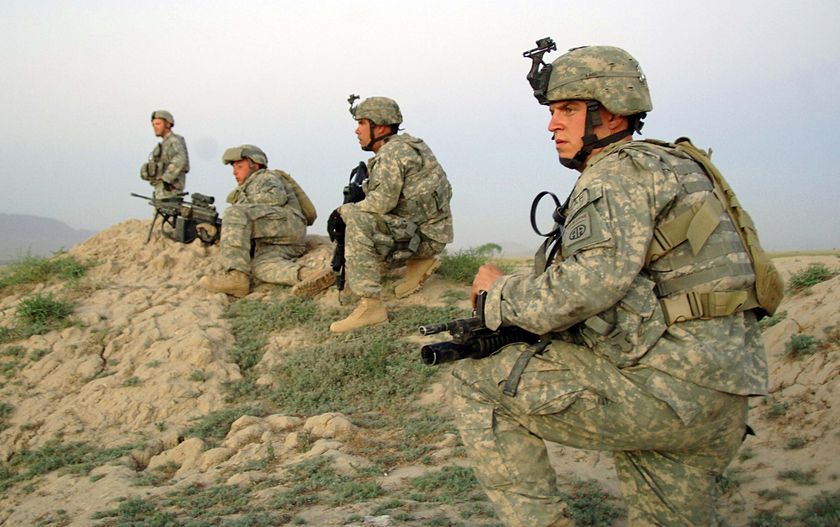
The United States needs to adopt a foreign policy that is more in tune with the times we are in. We should opt for engagement, instead of containment and use diplomatic means whenever possible. We should avoid overextending our resources and seek to empower other nations instead of setting up democracy for them. If we maintain an open and inclusive foreign policy, perceptions on the United States might, over time, change for the better, and we can better work with other nations to make the world a better place. This policy change is incredibly important, especially in dealing with an area as volatile as the Middle East.
The United States needs to adopt a foreign policy that is more in tune with the times we are in. We should opt for engagement, instead of containment and use diplomatic means whenever possible. We should avoid overextending our resources and seek to empower other nations instead of setting up democracy for them. If we maintain an open and inclusive foreign policy, perceptions on the United States might, over time, change for the better, and we can better work with other nations to make the world a better place. This policy change is incredibly important, especially in dealing with an area as volatile as the Middle East.
Thursday, November 15, 2012
Comparing Economic Freedom
In our world, there is extraordinary disparity in the degree of economic freedom. While some countries, like Australia, Ireland, and the United States have very high economic freedom, others are widely classified as repressed. Here's a world breakdown of economic equality:

If we measure economic freedom versus economic productivity, we can see the benefits of creating a free-market economy:

These two graphics, with a bit of extra information, can provide us with a few lessons. First of all, the greatest growth in economic freedom has been occurring in emerging markets, which bodes well for these countries trying to grow. China and India, also, have in fact gained on the scale in economic freedom. Latin America has seen small improvement too.
The obvious takeaway is that the more restrictions a country puts on businesses, consumers, and investors, the more they will struggle financially. While some regulation can be good, to much restriction clearly limits growth.
Another takeaway concerns the Middle East. Many of the Middle Eastern and African countries are solidly in red or orange. These closed societies are not only breeding grounds for terrorism and intolerance, but they also offer little economic opportunity to their citizens. This is especially dangerous, for oppressive societies in poverty are likely to stay oppressive, and young people trying to avoid terrorist organizations will have little options and opportunity

If we measure economic freedom versus economic productivity, we can see the benefits of creating a free-market economy:

These two graphics, with a bit of extra information, can provide us with a few lessons. First of all, the greatest growth in economic freedom has been occurring in emerging markets, which bodes well for these countries trying to grow. China and India, also, have in fact gained on the scale in economic freedom. Latin America has seen small improvement too.
The obvious takeaway is that the more restrictions a country puts on businesses, consumers, and investors, the more they will struggle financially. While some regulation can be good, to much restriction clearly limits growth.
Another takeaway concerns the Middle East. Many of the Middle Eastern and African countries are solidly in red or orange. These closed societies are not only breeding grounds for terrorism and intolerance, but they also offer little economic opportunity to their citizens. This is especially dangerous, for oppressive societies in poverty are likely to stay oppressive, and young people trying to avoid terrorist organizations will have little options and opportunity
Wednesday, May 18, 2011
Upholding Its Values
The US was founded on principles of life, liberty, and the pursuit of happiness with a strong emphasis on justice and equality. While we have made great strides in our own country to make our society a better place for all, it's time the United States practiced what it preaches in foreign countries which it wields a strong influence in.
The United States is well known throughout the world for having a singular form of government and being founded on principles of justice. But as the US is invading other countries with seemingly no thought to the consequences, locals can get irritated. Some, more irritated than others.
The US has often acted in the name of "justice", but some of the irritation in the world, often in the Middle East, is justified. We must be better with the way we form relations with other peoples, not merely blasting aside people who don't agree with us. Being trigger happy on top of a flaming gunpowder casket is not a wise idea. If we hold true to our values all around the world, truly preaching and practicing peace, justice, and equality, our credibility would go up, and we would not be hated as much.
Even if we take these actions, some will still hate us. This may only be natural. At least though, we can make the effort to improve our image around the globe. We can really bring peace to other people's lives. We can moderate conflicts instead of creating new ones. We can take the lead in making the world a better, safer place for humankind.
The United States is well known throughout the world for having a singular form of government and being founded on principles of justice. But as the US is invading other countries with seemingly no thought to the consequences, locals can get irritated. Some, more irritated than others.
The US has often acted in the name of "justice", but some of the irritation in the world, often in the Middle East, is justified. We must be better with the way we form relations with other peoples, not merely blasting aside people who don't agree with us. Being trigger happy on top of a flaming gunpowder casket is not a wise idea. If we hold true to our values all around the world, truly preaching and practicing peace, justice, and equality, our credibility would go up, and we would not be hated as much.
Even if we take these actions, some will still hate us. This may only be natural. At least though, we can make the effort to improve our image around the globe. We can really bring peace to other people's lives. We can moderate conflicts instead of creating new ones. We can take the lead in making the world a better, safer place for humankind.
Saturday, May 7, 2011
Citizenship: What We Really Need
In our country, we cannot have a system that restricts who is a citizen merely by where they are born. We should instead pursue judgement of character as the paramount criterion. Instead of worrying whether or not someone is from the US and isn't an illegal immigrant, we should instead look to those who will make our society better. that's the kind of people we want making our decisions, that's the kind of citizen we need in America. Rigidity in who we call a citizen or not a citizen will restrict who can take part in benefiting the nation, a situation America cannot afford to pursue.
This does not mean we will let all illegals in and legalize them. No, but it does mean we need to have a new outlook on citizenship. We want people to pursue active citizenship, trying to benefit society, no matter who they are or where they are from. This can be a call to action for all Americans to step up and help society.
We hope, that one day in America, we will consider a citizen not just someone born in this country, or looks like they are from this country, but whether they want to improve and benefit this country. In order to become a great nation, we must have great people. In order to establish such a nation, we must all take action in our respective communities. We must usher in a new age where Americans must take pride in their country, take pride in their work, and take pride in calling themselves citizens of the United States of America. After all, we are not Whites, or Blacks, Caucasians, or Hispanics, legal or illegals, or even Democrats or Republicans. Instead, we are Americans. Though in will not be easy, we should all yearn for the day when everyone here in the United States of America will truly be United, and then we can truly call ourselves America.
This does not mean we will let all illegals in and legalize them. No, but it does mean we need to have a new outlook on citizenship. We want people to pursue active citizenship, trying to benefit society, no matter who they are or where they are from. This can be a call to action for all Americans to step up and help society.
We hope, that one day in America, we will consider a citizen not just someone born in this country, or looks like they are from this country, but whether they want to improve and benefit this country. In order to become a great nation, we must have great people. In order to establish such a nation, we must all take action in our respective communities. We must usher in a new age where Americans must take pride in their country, take pride in their work, and take pride in calling themselves citizens of the United States of America. After all, we are not Whites, or Blacks, Caucasians, or Hispanics, legal or illegals, or even Democrats or Republicans. Instead, we are Americans. Though in will not be easy, we should all yearn for the day when everyone here in the United States of America will truly be United, and then we can truly call ourselves America.
Christianity and Islam
Today, Islam and Christianity are often divided, portrayed as enemies in a quest for world dominance. The relationship, though, is more complicated than that. If we are to truly understand the workings of Christianity, or in many of our cases, Islam, we need to learn about each of them. Where they came from. What the worship. What they believe. Many of us unjustly discriminate against others merely because we do not understand them. They in turn, judge us because they do not understand us either. Radicals dominate the news, but most people are not radicals. They're just people.
Both Christianity and Islam stated from humble origins, are were effectively spread by peaceful means, such as traders or merchants. The peaceful spread of ideas was critical, as well as openness to other ethnic groups. In understanding that Christianity and Islam are in many ways the same and were both spread (and coexisted) at times peacefully, the world can one day hope to live peacefully with two powerful, insightful ideologies
We have much to learn from Islam's and Christianity's rich histories. Misunderstanding creates fear and anger amongst both parties. Christian-Muslim interaction is of paramount importance as the US, a predominantly Christian nation, fights in three Muslim countries to date. The stability of the region depends on how well we interact with them, and how we understand them.
With harmony, there is reason for optimism. With less disagreement, we can fight the world's problems with a combined moral purpose. To unite the world and dissolve the boundary of miscommunication that exists between many Christians and Muslims, an understanding must be reached. An understanding that reaches beyond our own religious beliefs, and understanding that reaches beyond faith.
Both Christianity and Islam stated from humble origins, are were effectively spread by peaceful means, such as traders or merchants. The peaceful spread of ideas was critical, as well as openness to other ethnic groups. In understanding that Christianity and Islam are in many ways the same and were both spread (and coexisted) at times peacefully, the world can one day hope to live peacefully with two powerful, insightful ideologies
We have much to learn from Islam's and Christianity's rich histories. Misunderstanding creates fear and anger amongst both parties. Christian-Muslim interaction is of paramount importance as the US, a predominantly Christian nation, fights in three Muslim countries to date. The stability of the region depends on how well we interact with them, and how we understand them.
With harmony, there is reason for optimism. With less disagreement, we can fight the world's problems with a combined moral purpose. To unite the world and dissolve the boundary of miscommunication that exists between many Christians and Muslims, an understanding must be reached. An understanding that reaches beyond our own religious beliefs, and understanding that reaches beyond faith.
Friday, May 6, 2011
Torture
The US must obey the Geneva convention and not torture people in detention. They are people too, and must be treated as such, no matter how different or evil they might be.
Many foreign combatants under our control are simply young men who had no future, so they turned to terrorism. Now, this decision may be frowned upon, but we must look at the root cause of the influx of these fighters if we are to succeed and make the world safer.
The root cause may be the instability of regions in which these fighters come from. If they have no future, no education, and they perceive their well being is in danger by foreign military forces, then they will fight, and fight with terrorism.
Torture, in fact, might not be as effective as it seems. While valuable information has been attained through "enhanced interrogation techniques", when people are under stress, they may not tell the truth. If someone is threatening you, you may be more likely to say whatever will get you get relieved of that stress, instead of what might be the truth. It is the same with combatants. They could say what interrogators want to hear, instead of what they need to hear. Treating everyone like humans will gain their respect, showing that we are not in fact evil. Once they realize that, they can be of much more help than ever before.
Many foreign combatants under our control are simply young men who had no future, so they turned to terrorism. Now, this decision may be frowned upon, but we must look at the root cause of the influx of these fighters if we are to succeed and make the world safer.
The root cause may be the instability of regions in which these fighters come from. If they have no future, no education, and they perceive their well being is in danger by foreign military forces, then they will fight, and fight with terrorism.
Torture, in fact, might not be as effective as it seems. While valuable information has been attained through "enhanced interrogation techniques", when people are under stress, they may not tell the truth. If someone is threatening you, you may be more likely to say whatever will get you get relieved of that stress, instead of what might be the truth. It is the same with combatants. They could say what interrogators want to hear, instead of what they need to hear. Treating everyone like humans will gain their respect, showing that we are not in fact evil. Once they realize that, they can be of much more help than ever before.
Nuclear Weapons
The US should not expect the rest of the world to forgo nuclear weapons when they themselves do not want to abandon their own policies. The US should take the lead and reduce, not necessarily eliminate, but reduce their nuclear weapons supply and not make any new ones. In turn, the US should encourage others to do the same. Others will not do so unless someone will take the lead, someone who does have a vested interest in nuclear nonproliferation. It should be the United States who takes the lead, as a major nuclear superpower. We cannot let nuclear weapons get in the hands of terrorists; this is understood. What we should work on is not a world where allies of the US have nuclear weapons and the rest don't, but as little countries as possible have nuclear weapons. Also, regarding missile shields, it is not a good thing to do and threatens other nations nearby, so that they are extremely uncomfortable with US presence. Many countries that are near it oppose it, and with good reason. Since we would not like missiles near our country, we should in turn honor others’ requests and not install missiles without their permission.
Subscribe to:
Posts (Atom)