Showing posts with label economy. Show all posts

Monday, April 8, 2013

The Importance of Manufacturing

As the United States begins its rebound from the recession, it is important to highlight how important the manufacturing industry is the the our nation's economy.  Manufacturing was one of the economic sectors that was hit hardest by the recession, and many of those jobs will either never or take a very long time to return.  


While there has been a significant increase of offshoring with manufacturing jobs, there is still a lot of work done here in America.  While some would argue that manufacturing is not as critical as it once was to warrant government support because of weak job creation numbers, these people miss a critical part of why we need manufacturing jobs in the United States.

large scale employment is not the main benefit of a strong manufacturing sector in our economy.  Support of manufacturing, specifically advanced manufacturing, will help the United States retain its status as a global hotspot for innovation and technological advancement.  Today, this is the main source of US competitiveness.  We have to realize that we cannot make everything anymore.  Manufacturing on large scales is much cheaper in east Asian countries.  Where we do have an edge, however, is the innovative spirit and technological know-how to come up with and create new technologies that will make world a better place.  

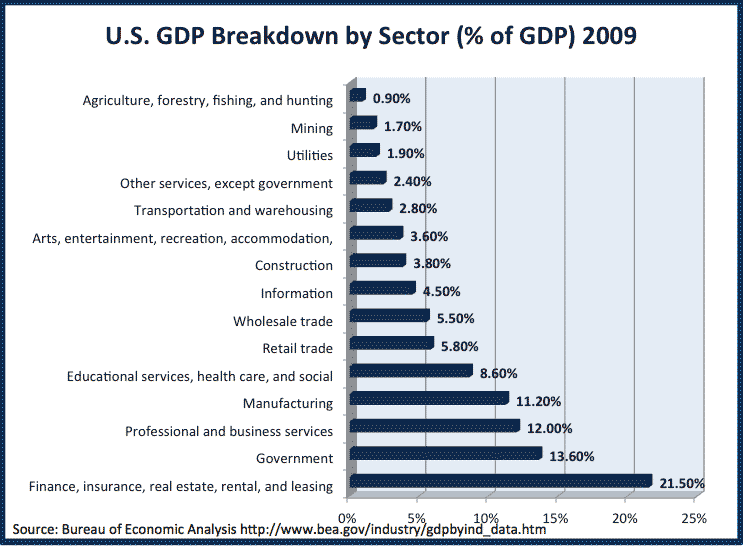
Today, the manufacturing sector makes up only around 11 percent of our nation's GDP.  As you can see from the graph above, the United States has experienced a constant downward trend in this statistic.  This is fairly constant with the rest of the world, on average.  However, despite it small share of GDP, according to the Brookings Institution, the manufacturing sector conducts 68 percent of research and development in the United States.  Brookings also notes that 22 percent of US manufacturers introduce new processes that increase productivity, as opposed to only 8 percent of non-manufacturers.  Additionally, manufacturing took up 60 percent of US exports despite its modest share in GDP.  

Although now a smaller part of our economy, the manufacturing sector is still very critical for the well being of our entire nation.

Wednesday, November 21, 2012

An Analysis of GDP

Gross Domestic Product, or GDP, is used by many economists as a measure of the overall strength of the economy.  It its simplest form, GDP is calculated by taking household consumption and adding to it business investment, government spending and net exports.  Below is a specific breakdown of each part of GDP for the United States in the second quarter of 2012.


One thing that is clear looking at this graph is how much household consumption contributes to our GDP.  Housing and Utilities purchases alone ($2.0 trillion) exceed all Federal spending, which amounts to a little over $1.2 trillion.  Business investment contributes significantly to our GDP as well. The takeaway from this is that if we really want to boost our economy, finding ways to promote consumers to spend more money is the way to go.  Here is a breakdown, by sector of the economy, of our GDP. This one references the GDP of 2009.


The percentages change from year to year, but generally we can see what parts of the economy are most important.  Here's how the US fits into the larger world picture:


As we can see, the United States is a large portion of the world economy.  It is the largest portion, in fact.  This means that the United States occupies a very important role as a producer and consumer of world goods.  What affects the United States affects the whole world.  We have seen this with the current financial situation.  When the United States was drawn into a deep recession, so to was most of the world.  In this country, we need to be mindful that our fiscal policies have a very wide ranging impact.  The same can be said for other countries in emerging markets.  When a single country occupies such a large slice of the world economy, their actions have huge consequences.

Here's a breakdown by state of our country's GDP:


The same lessons can be learned from this graph.  California, as a large slice of the pie in America, affects many citizens all around the country because of their decisions.  Indeed, they also occupy a large portion of the world economy.  Silicon Valley, the entertainment industry, and agriculture are all huge parts of the world economy. Small decisions in Los Angeles or San Jose or even Salinas can have impacts on a large stage.

Our Ideas:

With all this in mind, we can figure out efficient ways to boost our domestic production.  Increasing consumer spending and business investment is of paramount importance.    By keeping interest rates down in a bad economy, more money can be freed up for consumers and businesses, so that they can spend it in the economy.

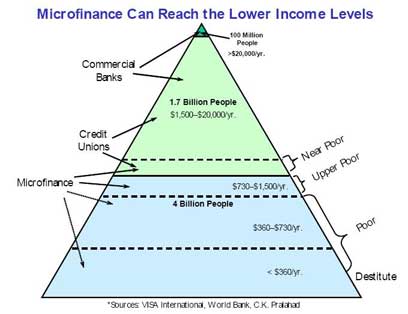
More needs to be done however.  We advocate applying principles of microlending to local communities in order to elevate people into economic success and sustainability.  We have outlined such a proposal in a previous post.  While this is not a sole solution, it could go a long way to providing funds for consumers and small businesses.


In hard times, we also need to empower these same small businesses by lowering their tax rates.  Small and medium sized businesses drive both business investment and household spending, so increases there will make a significant difference.

Additionally, much has been made of the United States' trade deficit.  In the topmost graphic, you will see a negative number for net exports.  In the graphic below, you will see the net exports as an overall percentage of our GDP.


This is not necessarily a bad thing.  Even though our trade deficit is large, it is only a small percentage of the total economy.  Even if the gap got bigger, it would not necessarily mean that our economy would be worse off.  If we go by the economic principle that trade increases wealth, a country with a trade deficit, if efficient, will make up that loss in some other area of the GDP.

We do this by specializing.  Importing items allows us to specialize in producing goods that we are especially good at making.  We don't have to be a large exporter to be a powerful economy.  If we have strong consumer spending and business investment numbers, as well as a certain amount of government spending, our economy will still be very strong for the future.  This country needs to work on exporting goods, but we need not worry to much about this trade deficit, as long as it stays within a small percentage of our GDP, because we can always specialize and produce something different, capitalizing off trade.

Tuesday, February 28, 2012

Economic Climate


Instead of the government picking winners and losers in the entrepreneurship field, they should foster a climate that promotes entrepreneurship.  The relationship with the government and businesses should not be one of conflict.  The economy can be private and public sector collaboration with both doing their part to ensure strong and sustainable growth.  The private sector will do the bulk of the growth, while a role for the public sector would be to maintain sustainability in that growth.  This cooperative relationship should facilitate growth and promote growth, not impede it.  In forming a sustainable plan, it is important to note that sustainability does not mean “restrict growth” but instead planning and coordinating growth in a way that that increase can be sustained.

Below, for reference, is the White House plan for sustainable growth:


Friday, December 30, 2011

More On Economic Climate

The economy can be a private and public sector collaboration with both doing their part to ensure strong and sustainable growth. The private sector will do the bulk of the growth, while a role for the public sector would be to maintain sustainability in that growth. This cooperative relationship should facilitate growth and promote growth, not impede it. In forming a sustainable plan, it is important to note that sustainability does not mean “restrict growth” but instead planning and coordinating growth in a way that that increase can be sustained.

Increase Creative Capital

To grow our national economy, we need to boost of creative capital, our capacity to innovate and create new items for the market.

Innovation can drive to market forward.  We have seen this time and time again in Silicon Valley.  Many countries have seen the benefit in this and tried to create their own havens for technological innovation.  The United States, if they are intelligent, would do well to preempt the action of other nations and develop even more thoroughly innovative centers of its own, not just in Silicon Valley.

Thursday, December 29, 2011

Economic Climate


Instead of the government picking winners and losers in the entrepreneurship field, they should foster a climate that promotes entrepreneurship.  Small businesses drive this nation forward, and the government should do what it can to foster a climate that promotes small businesses. The government should not be at odds with the private sector.  It should be an effective partnership to promote sustainable growth.