Showing posts with label debt. Show all posts

Sunday, December 9, 2012

Simpson Bowles: Defense Cuts and Why We Need Them

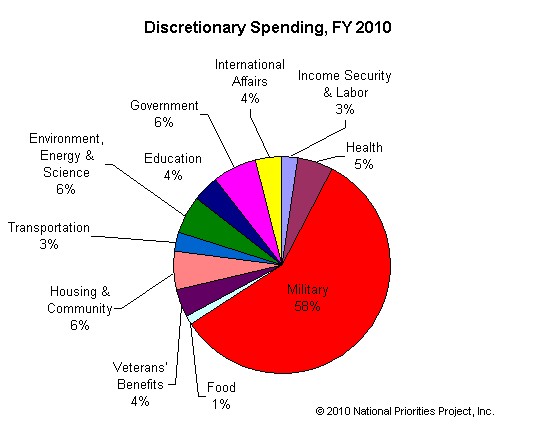
The Simpson-Bowles plan, which we mentioned in yesterday's post, calls for deep cuts in defense spending, and for good reason.  Defense spending makes up a significant portion of the nation's overall budget, and that share is even larger when we only look at discretionary spending.  This makes the Department of Defense a prime candidate for budget cuts.


Military spending has also ballooned in recent years because of wars in Iraq and Afghanistan.  Both these conflicts have increased the amount the United States spends on the military and each has had a significant effect of the debt of the nation.  In the figure below, we can see the gradual increase in spending after September 11th, until Obama's military budget freeze.


Spending this much money just doesn't seem like a valid use of resources.  The US military must learn to be more efficient with how it uses its money.  Other countries all around the world, though they do not have the same military capabilities and presence of the United States, spend far less than us on defense.  The United States is far and away the largest military spender in the world.  It's time it took a step back and found more efficient ways to do things.
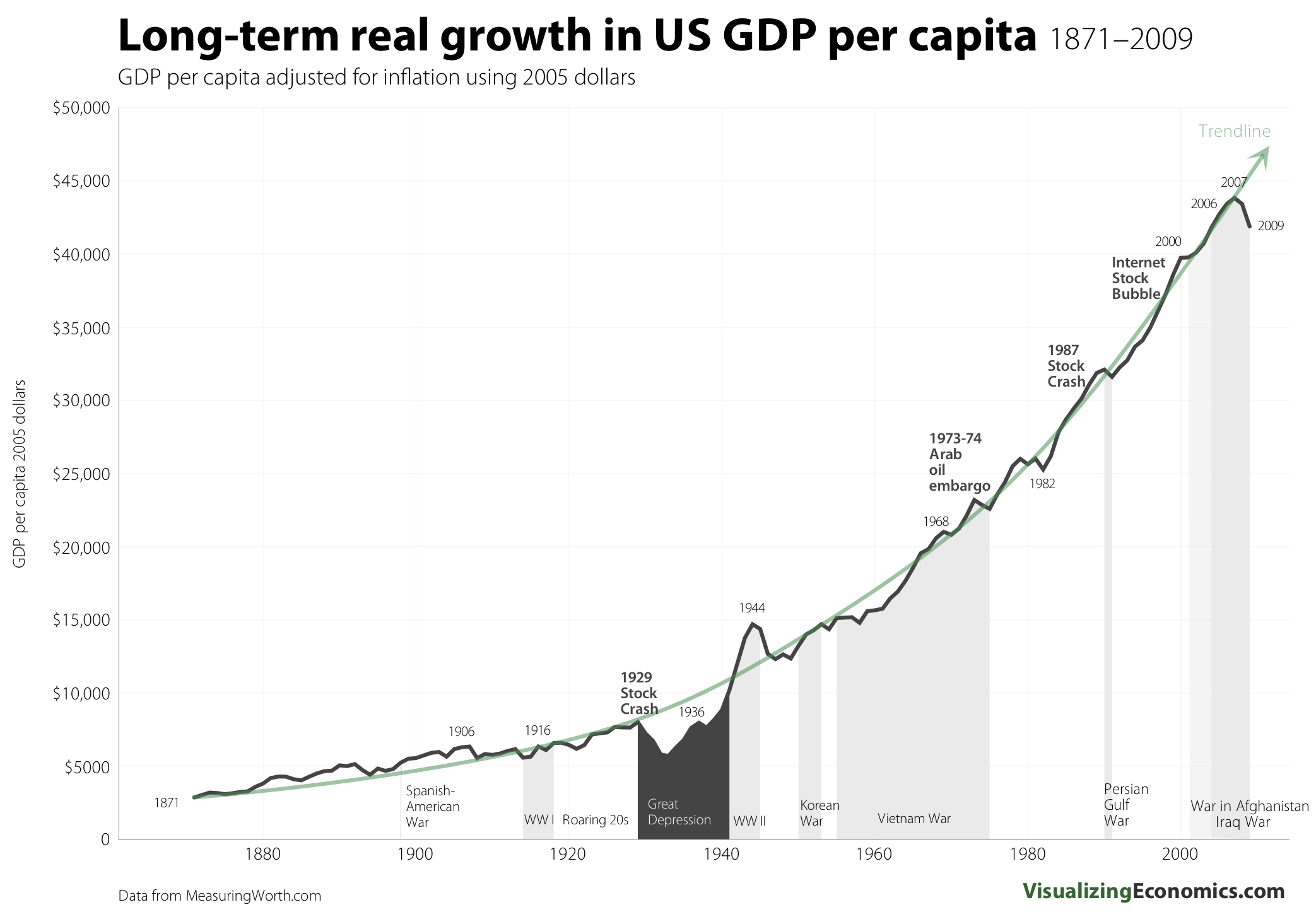
While military spending certainly helps US businesses grow and make profits, the amount the military spends is showing up less and less in actual changes to our GDP.  Therefore, the value in trimming debt is going to be a far greater positive than the effect of any growth maintaining the spending levels might cause.  


We can afford to make these defense cuts, and we will not be weaker as a nation because of them.  While we might deploy less soldiers and fighter jets around the world, we can still be the most powerful military in the world.  We spend so much, that cutting a bit probably won't make that much of a difference in the grand scheme of things. Also, a ballooning federal debt is also a national security risk, and endangers to solvency of our entire nation.  It is in our country's best interests to find ways to reduce debt, and cutting unnecessary defense spending is one way to do that.  As a part of a balanced approach, reforming the Pentagon budget is necessary in any negotiations regarding the fiscal cliff.

Monday, November 19, 2012

Debt vs. Deficit

Debt and deficit.  People often confuse the two.  Republican pundits attack Democratic policies on both.

A deficit occurs when all government incomes, called receipts, are less than the amount of government expenditures, called outlays.  Revenues come from income and other forms of taxes.  Expenditures result from a variety of purchases and entitlements. Since a deficit involves only a year's receipts and outlays, it applies to just one year. If the government took in $14 trillion and spent $15 trillion, the deficit would be $1 trillion.

When the government runs a deficit for a certain year, they need to borrow money in order to pay their bills.  To do so, the Federal Reserve can print some or all of the shortfall, but this typically leads to inflation.  How much inflation occurs depends on the amount printed.  If everyone has more money, and there are the same number of products, then those products will become more expensive.


Usually, instead of printing money, the government operates in credit markets, issuing bonds, like private companies can.  A bond is a form of a loan.  when the US Treasury issues its bonds, it means it is promising to pay that money, which it needs now, in the future.  When governments issue bonds, investors buy them up, selling them on secondary markets.

Debt, on the other hand, is basically accumulated deficits.  If the government has to keep issuing bonds, borrowing money each year to pay its outlays, then the debt will continue to grow.


Debt typically grows each year.  With each successive deficit, the debt, or at least the gross debt, will continue to grow.  A misconception is that if the government takes in more than it spends, that its receipts are greater than its outlays, that there is no debt.  This just means that the government has managed to run a surplus, but all debt that was accumulated previous years is still there.

It is accepted by most economists that some debt, sometimes, is a good thing for the nation and the economy.  When in a recession, tax revenue falls because of the lack of business and personal growth.  If tax rates are slashed, the revenues will fall even more.  The government also spends more on its social  programs such as unemployment insurance/benefits, so the government should run a deficit in order to pay for all that.  Conservatives argue that deficits in bad times need to be offset by surpluses in good times.  However, this does not need to be the case, when we consider debt in relation to our nations economic productivity, the GDP.


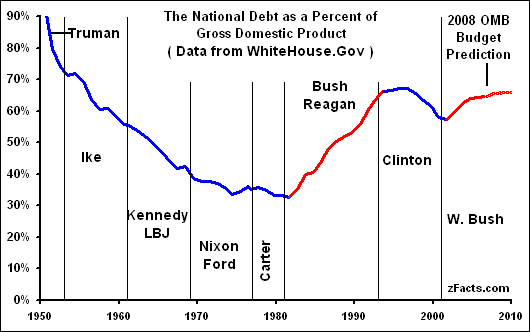
If the debt remains at a steady percentage of our GDP, the government can sustain that level of debt, even if they run deficits forever.  Consider the following: if the government has debt of 30% of its GDP at the start of a year, and it ran a balanced budget, even though the gross debt stayed the same, the percent with respect to GDP will go down.  The GDP almost always goes up.

The more our GDP grows, the more debt we can afford to take on.  GDP is basically an equivalent of the nation's tax base.  The more growth in the country, the more profits and salaries will rise, and the more tax revenue for the government.

There are negatives to government debt.  When the government has to continually issue bonds, these bonds compete with private ones on the investor's market, pushing up interest rates.  The more money the government takes from this market, the less money there is for the private sector.

Debt does have many positives though.  Families, for example, go into debt and borrow money in order to buy a house or pay for college.  The accumulated deficit of paying for one of these lasts for many years, but people still manage to pay it off.  Debt makes the benefits of owning a house and higher education reachable for more people.  Companies operate the same way, obtaining loans in order to expand, hoping for more profit later on.  In the same way, government can go into manageable debt in order to pay for items that its citizens deem important.

Tuesday, July 26, 2011

Debt Ceiling Political Shenanigans Are Ridiculous

It is time for the politicians to stop trying to gain leverage over each other politically and form a lasting deal that will save this country from financial ruin.  A deal that could help in the long run and not hurt as much in the short turn could look like this:

*Cuts to Entitlements--Entitlements are a severe drain on the budget.  They will soon become unaffordable.  A reasonable deal to limit the cost of these programs is necessary.  The Ryan plan may be unreasonable, but it does bring up the issue that we need to change what is broken.  We cannot afford to spend loads of money on entitlements down the road.

*Cuts to Defense--We spend WAY too much money on foreign wars, foreign bases, and expensive military technology.  We're not saying get rid of all of this, but surely some dough could be had from limiting foreign involvement and doing without a few new ships, tanks, or joint strike fighters.  These projects do bring money to several special congressmen's districts, so it may be hard, but limiting the expenditures of the state will surely help us down the road

*Cuts to make government more efficient--Lots of businesses are saving money simply by the way they operate.  The government could take a lesson from SOME private sector companies (HINT: NOT BANKS) in order to lower operation costs of some departments.  Trimming some here and some there may not seem like much, but applied to the whole government, one can have real and significant change.  People might not like it, but hey, we've got to trip money, and that's one way to do it.  Trim from the first and second bullets first though.

*Increase in revenue--Notice we didn't say "increase in taxes".  While others debate of what the exact meaning of not raising taxes is, there is no denying this: the governmental needs money.  In order to temper what will likely be harsh cuts, revenue must come to the government.  Taxes are how the government gets its money.  So, in order to ensure the severity does not fall to America's industrious middle class, who are fighting for their lives in the recession, we must turn to those who can stomach it, the rich.  We have tried trickle down economics, and it has not worked.  We need a strong middle class in America, so they shouldn't have to bear the burden of the recession and debt. Another note:  if the rich are taxed more, they're still rich, just as if the middle class are taxed less, they are also still in the middle class.


There are doubtless other ideas at how we can cut, trim, increase, decrease, or whatnot.  If we come up with any more, we'll definitely post them.  Feel free to tell us your own opinions.  We shouldn't throw out ideas just because of where they come from.  The citizens of this country must have their voice too.

Tuesday, May 31, 2011

Debt Ceiling Vote

We agree with many that comprehensive budget reform must be made before increasing the debt ceiling.  This, however, must be done swiftly in order to avoid breakdown.  We need a comprehensive plan to stop the wasteful spending.

There are some areas where the government should invest in, but we must invest the money wisely.  The government must have a sense of accountability to the people, because it is their money that government is spending.  We need to make programs more efficient and evaluate each and every aspect of our government to see if we can cut costs.  We should aim not to leach the government dry, but to ensure that we can do an effective job managing the nation on a budget, without going into debt.