Showing posts with label government. Show all posts

Saturday, November 24, 2012

Energy Reform Series: Part 1

The United States has a huge energy problem.  Gas price fluctuations throughout the year show us the fragility of our oil supply and our unhealthy dependence on petroleum for energy.  Coal mining accidents, very tragic occurrences, also force us to question our attachment to a resource that pollutes the environment so much.


The United States uses far too much resources like coal and oil and far to little of resources like solar and wind.  Yes, part of the reason is the price of the energy, but these polluting resources also have an unquantifiable environmental price.  Additionally, with government and private sector help, we can make these forms of energy cheap and efficient.

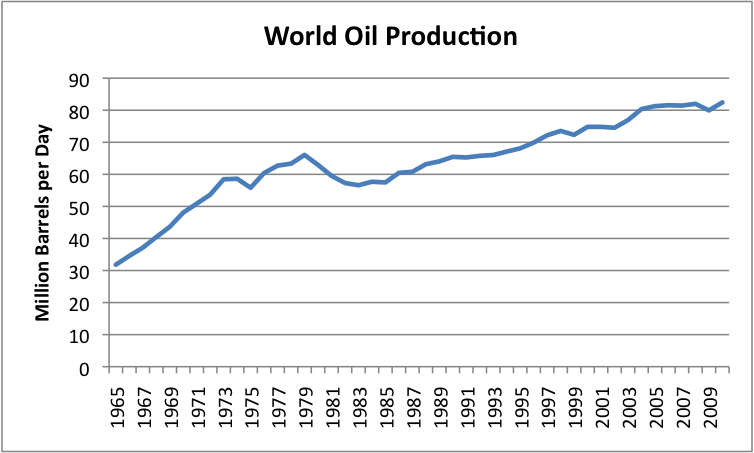
world oil production has increased in recent decades

Conservatives who wail that the government should not get involved should take a history lesson.  A lot of change has come out of government action, and for the better.  NASA, for a while, was the sole consumer of major computers, sustaining an infant industry that has now led to a huge tech sector in the United States.  A form of the Internet was started by the Department of Defense.  Government investment has lead to University funding and the Space Race.  Therefore, we can safely say that there is a place and time for government investment.

We need to make sure that we, as a country, jump ahead and capitalize on energy reform.  If America does not take the lead, some other country will do so, and we will have to buy it from them.  Coming up with and manufacturing the new clean energy technology does not require vast oil reserves or coal mines.  All it requires is an innovative spirit, ingenuity, a bit of private capital, and political will.  We have all of these, to varying extents, right here in America.  The only thing lacking in any regard would be political will.  We need leadership in Washington and around the country to kick-start a clean energy revolution.

By bringing in government investment and private capital, we can diversify our energy sources and make sure  it is affordable and the industry is sustainable.  The US can then become a leader on the world stage, exporting this technology to the rest of the globe.  By being a leader in clean energy, the US could mitigate the influence OPEC countries like Iran wield simply because they have oil.  By acting now, the US can secure its place in the energy hierarchy of the globe.

Wednesday, November 21, 2012

An Analysis of GDP

Gross Domestic Product, or GDP, is used by many economists as a measure of the overall strength of the economy.  It its simplest form, GDP is calculated by taking household consumption and adding to it business investment, government spending and net exports.  Below is a specific breakdown of each part of GDP for the United States in the second quarter of 2012.


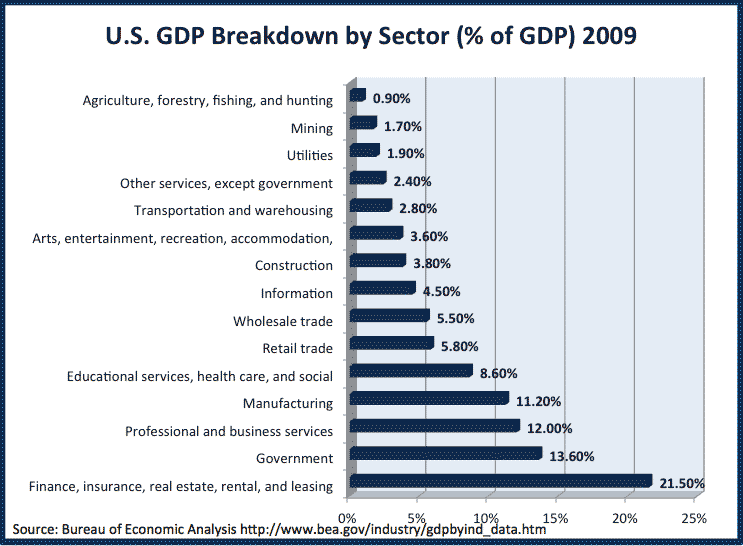
One thing that is clear looking at this graph is how much household consumption contributes to our GDP.  Housing and Utilities purchases alone ($2.0 trillion) exceed all Federal spending, which amounts to a little over $1.2 trillion.  Business investment contributes significantly to our GDP as well. The takeaway from this is that if we really want to boost our economy, finding ways to promote consumers to spend more money is the way to go.  Here is a breakdown, by sector of the economy, of our GDP. This one references the GDP of 2009.


The percentages change from year to year, but generally we can see what parts of the economy are most important.  Here's how the US fits into the larger world picture:


As we can see, the United States is a large portion of the world economy.  It is the largest portion, in fact.  This means that the United States occupies a very important role as a producer and consumer of world goods.  What affects the United States affects the whole world.  We have seen this with the current financial situation.  When the United States was drawn into a deep recession, so to was most of the world.  In this country, we need to be mindful that our fiscal policies have a very wide ranging impact.  The same can be said for other countries in emerging markets.  When a single country occupies such a large slice of the world economy, their actions have huge consequences.

Here's a breakdown by state of our country's GDP:


The same lessons can be learned from this graph.  California, as a large slice of the pie in America, affects many citizens all around the country because of their decisions.  Indeed, they also occupy a large portion of the world economy.  Silicon Valley, the entertainment industry, and agriculture are all huge parts of the world economy. Small decisions in Los Angeles or San Jose or even Salinas can have impacts on a large stage.

Our Ideas:

With all this in mind, we can figure out efficient ways to boost our domestic production.  Increasing consumer spending and business investment is of paramount importance.    By keeping interest rates down in a bad economy, more money can be freed up for consumers and businesses, so that they can spend it in the economy.

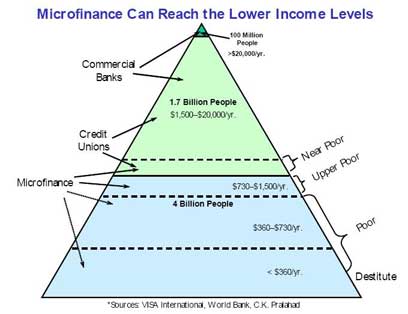
More needs to be done however.  We advocate applying principles of microlending to local communities in order to elevate people into economic success and sustainability.  We have outlined such a proposal in a previous post.  While this is not a sole solution, it could go a long way to providing funds for consumers and small businesses.


In hard times, we also need to empower these same small businesses by lowering their tax rates.  Small and medium sized businesses drive both business investment and household spending, so increases there will make a significant difference.

Additionally, much has been made of the United States' trade deficit.  In the topmost graphic, you will see a negative number for net exports.  In the graphic below, you will see the net exports as an overall percentage of our GDP.


This is not necessarily a bad thing.  Even though our trade deficit is large, it is only a small percentage of the total economy.  Even if the gap got bigger, it would not necessarily mean that our economy would be worse off.  If we go by the economic principle that trade increases wealth, a country with a trade deficit, if efficient, will make up that loss in some other area of the GDP.

We do this by specializing.  Importing items allows us to specialize in producing goods that we are especially good at making.  We don't have to be a large exporter to be a powerful economy.  If we have strong consumer spending and business investment numbers, as well as a certain amount of government spending, our economy will still be very strong for the future.  This country needs to work on exporting goods, but we need not worry to much about this trade deficit, as long as it stays within a small percentage of our GDP, because we can always specialize and produce something different, capitalizing off trade.

Sunday, July 1, 2012

More Efficient Governance

The bureaucratic United States Government must undergo an evolution.  This is no longer the time to be a big, slow, thundering giant in the world.  In order to better serve its citizens, the United States government must be fast and efficient, delivering the needs of its people more rapidly.  Globalization has changed our world to where it is no longer the largest, most powerful countries that win.  Now, efficiency, speed, and quality are rewarded in the world markets.  The government can harness to power of the internet to speed up services that have taken nearly forever previously.  Why stand in line so long at the DMV or other local government agency when you can do it at home on your computer?  Why must government projects take so long to attain approval and begin work?  By utilizing current and future technologies, we can create a more efficient government in our country.

For reference, here is a breakdown of how the Federal Government spends its money:


Tuesday, August 23, 2011

Two Party System is Broken

The two party system is dividing America.  With both the GOP and the Democratic Party's refusal to negotiate or give up ground on key issues, the American people continue to lose.  Instead of enacting reforms that Americans need, the parties have been politicking each move, deciding that electoral security is better than a prosperous America.

We need action.

We need people in the Congress who can form consensuses with others and keep in touch with the people.  Instead of feeding more money to their districts, we need to make government more efficient.  With such streamlining, we can promote growth.    The government needs to act for the people it represents, not just the big donors that bankroll their campaigns.  Most Americans are not so far to the left or right as our representatives.  We need people who will protect and work for the people's interests.

Tuesday, July 26, 2011

Debt Ceiling Political Shenanigans Are Ridiculous

It is time for the politicians to stop trying to gain leverage over each other politically and form a lasting deal that will save this country from financial ruin.  A deal that could help in the long run and not hurt as much in the short turn could look like this:

*Cuts to Entitlements--Entitlements are a severe drain on the budget.  They will soon become unaffordable.  A reasonable deal to limit the cost of these programs is necessary.  The Ryan plan may be unreasonable, but it does bring up the issue that we need to change what is broken.  We cannot afford to spend loads of money on entitlements down the road.

*Cuts to Defense--We spend WAY too much money on foreign wars, foreign bases, and expensive military technology.  We're not saying get rid of all of this, but surely some dough could be had from limiting foreign involvement and doing without a few new ships, tanks, or joint strike fighters.  These projects do bring money to several special congressmen's districts, so it may be hard, but limiting the expenditures of the state will surely help us down the road

*Cuts to make government more efficient--Lots of businesses are saving money simply by the way they operate.  The government could take a lesson from SOME private sector companies (HINT: NOT BANKS) in order to lower operation costs of some departments.  Trimming some here and some there may not seem like much, but applied to the whole government, one can have real and significant change.  People might not like it, but hey, we've got to trip money, and that's one way to do it.  Trim from the first and second bullets first though.

*Increase in revenue--Notice we didn't say "increase in taxes".  While others debate of what the exact meaning of not raising taxes is, there is no denying this: the governmental needs money.  In order to temper what will likely be harsh cuts, revenue must come to the government.  Taxes are how the government gets its money.  So, in order to ensure the severity does not fall to America's industrious middle class, who are fighting for their lives in the recession, we must turn to those who can stomach it, the rich.  We have tried trickle down economics, and it has not worked.  We need a strong middle class in America, so they shouldn't have to bear the burden of the recession and debt. Another note:  if the rich are taxed more, they're still rich, just as if the middle class are taxed less, they are also still in the middle class.


There are doubtless other ideas at how we can cut, trim, increase, decrease, or whatnot.  If we come up with any more, we'll definitely post them.  Feel free to tell us your own opinions.  We shouldn't throw out ideas just because of where they come from.  The citizens of this country must have their voice too.

Sunday, June 26, 2011

Treatise on Open Government

It is the duty of any government to provide the means to its inhabitants an ability to follow and understand what the government is doing.  In our nation, the system of checks and balances keep either the executive, legislative, and judiciary branches from attaining to much authority.  The people, however, are the final check on a government.  They give the consent to govern.  It is from them that the government gets its authority and legitimacy.  As a result, the government has an obligation to do what the people wish and make it evident that they are doing so.  The government must always be held accountable to the people, so the government should provide as much information as necessary to let the people know what is going on.

Tuesday, May 31, 2011

Debt Ceiling Vote

We agree with many that comprehensive budget reform must be made before increasing the debt ceiling.  This, however, must be done swiftly in order to avoid breakdown.  We need a comprehensive plan to stop the wasteful spending.

There are some areas where the government should invest in, but we must invest the money wisely.  The government must have a sense of accountability to the people, because it is their money that government is spending.  We need to make programs more efficient and evaluate each and every aspect of our government to see if we can cut costs.  We should aim not to leach the government dry, but to ensure that we can do an effective job managing the nation on a budget, without going into debt.

Friday, May 6, 2011

More on Foreign Policy

Instability in many nations leads to an influx in terrorists.  In order to combat this, we look at the root cause, so that we may hope to understand why this is happening. 

Instead of intruding into other countries, we must respect their sovereignty and push for reform.  In many instances, there are cruel dictators that will not reform or negotiate.  Conflict might be inevitable, no matter how much negotiation goes on.  Intervention will occur, but what then?  Before going in, powers need to have a game-plan on what will happen afterwards.  Concrete planning and collaboration with the locals on how to make their lives better and more peaceful is needed.  Nation-building is often frowned upon as policy, yet this may be needed.  Military action with no back end involvement will lead to the destruction of order in a country, bring the nation, and consequently the entire region, into chaos.

We need to work with the people of other countries, planning for strong, open, effective governments, accountable to the people, and free of corruption.

Wednesday, May 4, 2011

Basic Finances

In order to remain fiscally responsible and free of debt, many American families and businesses adopt a simple principle: don't spend more than you take in.  It's simple finances.  School groups do it.  Lemonade stands do it. Lots of people do this.  The question remains: why doesn't the federal government do this?

The feds have been lax on what kind of debt they will allow, and both parties are to blame for this is some way or another.  Yes, Democrats traditionally win the yearly overspending contest, but Republicans insistence on only cutting spending while at the same time cutting taxes, often for the rich, wins no prize for its responsibility.  Both parties spend huge amounts on foreign wars.

It makes little sense to only cut spending or only raise taxes in order to cut the deficit.  Using only one of these methods ends up with a tougher strain on the middle class and/or Government with to little funding too effectively complete its job.  Exercising both options tempers the harshness.  Cutting taxes on the wealthiest Americans makes the most sense, since they are the ones that can afford it.  One thing that politicians must realize is that these taxes are never really going to redistribute the wealth.  When the rich are taxed more, they will still be rich.  When the middle class is taxed less, they are still in the middle class.

All this, though, does not take away the responsibility of the Federal Government to spend its money wisely.  Its our money.  Fiscal responsibility is imperative.  Cut programs that don't work and aren't effective, and reward programs that do more with less.  There are ways to do the same job with less money, and it still doesn't mean less workers.

Spending money wisely is basic economics; its about time Washington learned its lessons.

Tuesday, May 3, 2011

Young People

Ignoring the young people of a nation is a grave offense on the part of any government.  It is tragic whenever governments do this and they are duly punished.  When young people are ignored, the get angry and revolt.  Change needs to come; reform must be swift.

What we really need

Overall, both big government and small government are bad. The Auxilia Party believes in a balance between the people and the government. In part, the Auxilia allied forces are the government and the people in an alliance to better this nation. In some areas the people have more power and in others, the government has more power. But overall, it should be a mutual discussion and connection between the people and the government.

Government

We are not for big government or small government.  Instead, we are for government that works and works for the people, with the people.