Showing posts with label spending. Show all posts

Sunday, December 9, 2012

Simpson Bowles: Defense Cuts and Why We Need Them

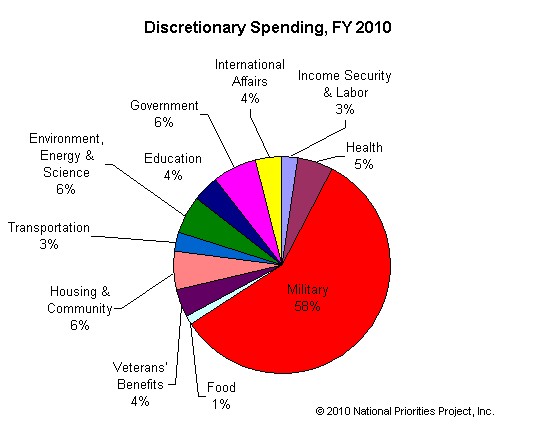
The Simpson-Bowles plan, which we mentioned in yesterday's post, calls for deep cuts in defense spending, and for good reason.  Defense spending makes up a significant portion of the nation's overall budget, and that share is even larger when we only look at discretionary spending.  This makes the Department of Defense a prime candidate for budget cuts.


Military spending has also ballooned in recent years because of wars in Iraq and Afghanistan.  Both these conflicts have increased the amount the United States spends on the military and each has had a significant effect of the debt of the nation.  In the figure below, we can see the gradual increase in spending after September 11th, until Obama's military budget freeze.


Spending this much money just doesn't seem like a valid use of resources.  The US military must learn to be more efficient with how it uses its money.  Other countries all around the world, though they do not have the same military capabilities and presence of the United States, spend far less than us on defense.  The United States is far and away the largest military spender in the world.  It's time it took a step back and found more efficient ways to do things.
While military spending certainly helps US businesses grow and make profits, the amount the military spends is showing up less and less in actual changes to our GDP.  Therefore, the value in trimming debt is going to be a far greater positive than the effect of any growth maintaining the spending levels might cause.  


We can afford to make these defense cuts, and we will not be weaker as a nation because of them.  While we might deploy less soldiers and fighter jets around the world, we can still be the most powerful military in the world.  We spend so much, that cutting a bit probably won't make that much of a difference in the grand scheme of things. Also, a ballooning federal debt is also a national security risk, and endangers to solvency of our entire nation.  It is in our country's best interests to find ways to reduce debt, and cutting unnecessary defense spending is one way to do that.  As a part of a balanced approach, reforming the Pentagon budget is necessary in any negotiations regarding the fiscal cliff.

Wednesday, November 21, 2012

An Analysis of GDP

Gross Domestic Product, or GDP, is used by many economists as a measure of the overall strength of the economy.  It its simplest form, GDP is calculated by taking household consumption and adding to it business investment, government spending and net exports.  Below is a specific breakdown of each part of GDP for the United States in the second quarter of 2012.


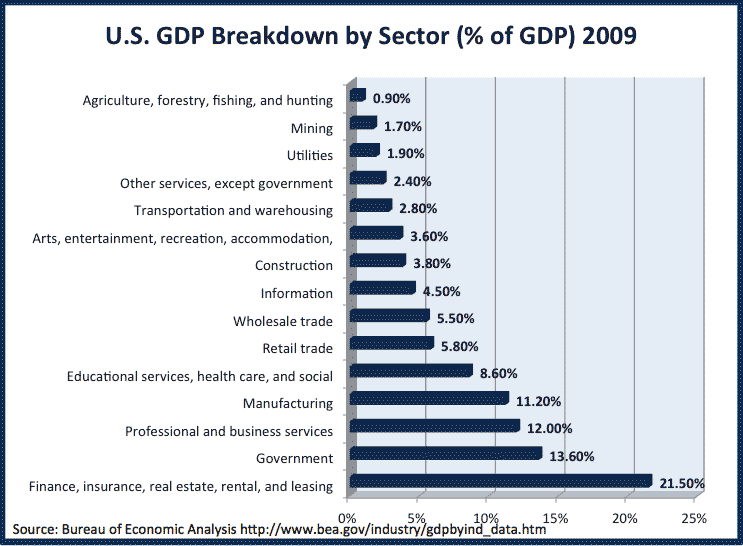
One thing that is clear looking at this graph is how much household consumption contributes to our GDP.  Housing and Utilities purchases alone ($2.0 trillion) exceed all Federal spending, which amounts to a little over $1.2 trillion.  Business investment contributes significantly to our GDP as well. The takeaway from this is that if we really want to boost our economy, finding ways to promote consumers to spend more money is the way to go.  Here is a breakdown, by sector of the economy, of our GDP. This one references the GDP of 2009.


The percentages change from year to year, but generally we can see what parts of the economy are most important.  Here's how the US fits into the larger world picture:


As we can see, the United States is a large portion of the world economy.  It is the largest portion, in fact.  This means that the United States occupies a very important role as a producer and consumer of world goods.  What affects the United States affects the whole world.  We have seen this with the current financial situation.  When the United States was drawn into a deep recession, so to was most of the world.  In this country, we need to be mindful that our fiscal policies have a very wide ranging impact.  The same can be said for other countries in emerging markets.  When a single country occupies such a large slice of the world economy, their actions have huge consequences.

Here's a breakdown by state of our country's GDP:


The same lessons can be learned from this graph.  California, as a large slice of the pie in America, affects many citizens all around the country because of their decisions.  Indeed, they also occupy a large portion of the world economy.  Silicon Valley, the entertainment industry, and agriculture are all huge parts of the world economy. Small decisions in Los Angeles or San Jose or even Salinas can have impacts on a large stage.

Our Ideas:

With all this in mind, we can figure out efficient ways to boost our domestic production.  Increasing consumer spending and business investment is of paramount importance.    By keeping interest rates down in a bad economy, more money can be freed up for consumers and businesses, so that they can spend it in the economy.

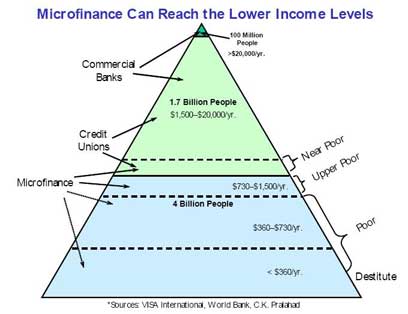
More needs to be done however.  We advocate applying principles of microlending to local communities in order to elevate people into economic success and sustainability.  We have outlined such a proposal in a previous post.  While this is not a sole solution, it could go a long way to providing funds for consumers and small businesses.


In hard times, we also need to empower these same small businesses by lowering their tax rates.  Small and medium sized businesses drive both business investment and household spending, so increases there will make a significant difference.

Additionally, much has been made of the United States' trade deficit.  In the topmost graphic, you will see a negative number for net exports.  In the graphic below, you will see the net exports as an overall percentage of our GDP.


This is not necessarily a bad thing.  Even though our trade deficit is large, it is only a small percentage of the total economy.  Even if the gap got bigger, it would not necessarily mean that our economy would be worse off.  If we go by the economic principle that trade increases wealth, a country with a trade deficit, if efficient, will make up that loss in some other area of the GDP.

We do this by specializing.  Importing items allows us to specialize in producing goods that we are especially good at making.  We don't have to be a large exporter to be a powerful economy.  If we have strong consumer spending and business investment numbers, as well as a certain amount of government spending, our economy will still be very strong for the future.  This country needs to work on exporting goods, but we need not worry to much about this trade deficit, as long as it stays within a small percentage of our GDP, because we can always specialize and produce something different, capitalizing off trade.

Saturday, November 19, 2011

Balanced Budget Amendment

The idea behind a balanced budget is great, but limiting ourselves to a balanced budget with a constitutional amendment limits the flexibility government has with its money.
Many states, such as California, have had crippling debt problems, often because they are required to have a balanced budget.  While this is good for states and localities, national governments need the flexibility that comes with a temporarily unbalanced budget.
We need to cut spending gradually, not all at once.  While the Republicans are correct that we need extreme change to the spending in our nation, a balanced budget amendment is not the best way to do it.

Tuesday, July 26, 2011

Debt Ceiling Political Shenanigans Are Ridiculous

It is time for the politicians to stop trying to gain leverage over each other politically and form a lasting deal that will save this country from financial ruin.  A deal that could help in the long run and not hurt as much in the short turn could look like this:

*Cuts to Entitlements--Entitlements are a severe drain on the budget.  They will soon become unaffordable.  A reasonable deal to limit the cost of these programs is necessary.  The Ryan plan may be unreasonable, but it does bring up the issue that we need to change what is broken.  We cannot afford to spend loads of money on entitlements down the road.

*Cuts to Defense--We spend WAY too much money on foreign wars, foreign bases, and expensive military technology.  We're not saying get rid of all of this, but surely some dough could be had from limiting foreign involvement and doing without a few new ships, tanks, or joint strike fighters.  These projects do bring money to several special congressmen's districts, so it may be hard, but limiting the expenditures of the state will surely help us down the road

*Cuts to make government more efficient--Lots of businesses are saving money simply by the way they operate.  The government could take a lesson from SOME private sector companies (HINT: NOT BANKS) in order to lower operation costs of some departments.  Trimming some here and some there may not seem like much, but applied to the whole government, one can have real and significant change.  People might not like it, but hey, we've got to trip money, and that's one way to do it.  Trim from the first and second bullets first though.

*Increase in revenue--Notice we didn't say "increase in taxes".  While others debate of what the exact meaning of not raising taxes is, there is no denying this: the governmental needs money.  In order to temper what will likely be harsh cuts, revenue must come to the government.  Taxes are how the government gets its money.  So, in order to ensure the severity does not fall to America's industrious middle class, who are fighting for their lives in the recession, we must turn to those who can stomach it, the rich.  We have tried trickle down economics, and it has not worked.  We need a strong middle class in America, so they shouldn't have to bear the burden of the recession and debt. Another note:  if the rich are taxed more, they're still rich, just as if the middle class are taxed less, they are also still in the middle class.


There are doubtless other ideas at how we can cut, trim, increase, decrease, or whatnot.  If we come up with any more, we'll definitely post them.  Feel free to tell us your own opinions.  We shouldn't throw out ideas just because of where they come from.  The citizens of this country must have their voice too.

Tuesday, May 3, 2011

Economics

Democrats and Republicans go on and on about spending and taxes but none of them have the real solution.  The Democrats have to realize that there is more in life than spending government money as much as they want, and the Republicans have to realize that they can’t always demand no taxes.  Taxes are essential for government to function.  But also, the government must also be more efficient and careful in the way they spend money.  No wasteful spending is mandatory.  Tax cuts should be for the poor and middle class and the super rich, who can afford it, should be taxed more.  One thing politicians don’t realize is that these taxes aren't going to redistribute the wealth.  When the rich are taxed more, they’re still rich.  When the middle class gets a tax cut, they’re still in the middle class.   The tax cut just helps them to stay where they are.  This compromise is the best solution to our economic problems.