Tuesday, November 13, 2012

Changes Beyond Immigration Needed on GOP Policy

For the Republican Party to improve its standing among Latinos and other immigrants, much more is needed than simply immigration reform.  Immigrants need to feel included by the Republican Party and wanted in this country.  Like all of us, they want jobs and economic security.  They want, as many of us do, strong education for their children.

To a certain extent, this can be a lesson to both major parties.  The Republican Party, however, is the party that lost the minority vote by a very large margin this election, so we'll focus mainly on them for now.

Policies that Democrats have championed that are favorable to Latinos have been rejected by many Republicans, such as the Dream Act.  Below is one poll, out of many, that shows strong Latino support for the dream act, which was passed by a Democratic House of Representatives and fell by a GOP filibuster in the US Senate.
Strong Latino support seems to be ignored by Republicans, who are against what they perceive as amnesty for illegal immigrants.  While Republicans have certainly had ideas about immigration, it usually takes the form of a deport-first, something that rankles some more moderate GOP members of congress.  Marco Rubio, Senator from Florida, came up with a competing measure to the Democratic Dream act, sponsored by Illinois's Dick Durbin, to push the issue of immigration.  Here is a Latino preference breakdown of the two competing bills:


The Durbin proposal is clearly more popular in this poll, conducted by Latino Decisions.  The main difference between the two bills is that Durbin's offer's a path to citizenship, while Rubio's does not, instead giving non-immigrant visas to the children of illegal immigrants.  Rubio has cooled on his own bill recently, seemingly outdone by President Obama's executive order.  If the GOP wants to take the lead on immigrant issues, they will have to do far more than simply change their immigration policies.  They need to come up with plans like the Dream Act to empower Latino youths by providing them with a means to get an education.  Being a strong support of the youth movement gained Obama much needed grassroots support in 2008, and to a certain extent, again in 2012.  The Republican Party needs to not only cater to immigrants, but cater to young immigrants/immigrant's children, in order to survive this change in the electorate.

Monday, November 12, 2012

GOP's Demographic Problems

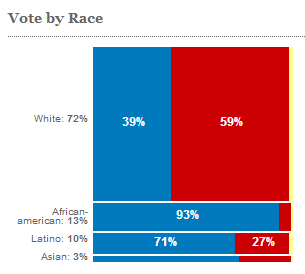
Below is a chart of the demographic breakdown for the presidential election of 2012.  As one can clearly see, the Republican Party did well with white voters, but quite poorly with minority voters, a problem brought upon themselves.  In recent years, the GOP has taken a combative stance against illegal immigration and minority rights.  While some Republicans might blame the message rather than the actual policy, it has been duly noted that the Republican party is not an ardent supporter of immigrant and minority rights.  Bills have been passed in states, such as Arizona and Alabama, that would seem to encourage racial profiling to find illegal immigrants.


The results from both the 2008 and 2012 elections do not bode well for Republicans.  The demographic is shifting now, with minorities making up a larger portion of the electorate.  Now, with two strong showings, the Democrats, at least for now, have the allegiance of this critical groups.  The electoral map, therefore, has dramatically changed from previous decades, with Democrats running well in western states as well as Florida.


Here is the electoral map for the 2012 Presidential election:


And here's one for 2012:


As one can see, Obama won Colorado, Nevada, New Mexico, and Florida in both elections, all states that have gone Republican in the past and have been classified as more right leaning.  All these states have large Latino populations that are only getting larger.  In order to ensure that they can survive on a national scale, the Republican Party must moderate their position on immigration and other issues important to minorities, especially Latinos.  It is not just that they have trouble communicating their message.  They need to be leaders on the issues that matter to these groups.

There are many risers in the GOP that could help with this, though many are outside of Washington.  By adapting their policies, the Republican Party could become more centrist and appeal to many minorities, as well as independents.  By becoming more inclusive rather than exclusive, they can promote policies that will benefit all of America rather than some of America and help them become stronger politically, a win-win for Republicans.  Advocating fiscal responsibility will resonate with many people and if the party can change a bit and become more innovative when it comes to minority groups, the GOP can become much more formidable in national elections and perhaps make this country a better place. 

Tuesday, November 6, 2012

Electoral Reform

In this election, individuals and corporations have been able to spends tones of money while being "unaffiliated" with a candidate.  This poses significant problems for the US.  We need elections that are not bought; not sold to the highest bidder.  We need legitimate electoral reform where there are caps on spending and getting rid of the electoral college.

A map scaled to reflect the dollar importance in the 2012 election
National Public Radio featured the map above, as well as some others, in a feature where they showed how different states have vastly different electoral, as well as monetary importance for candidates.  There article can be found here: A Campaign Map, Morphed By Money.  With Super PACs, the problem is now compounded  with even more money flowing into the election this year.

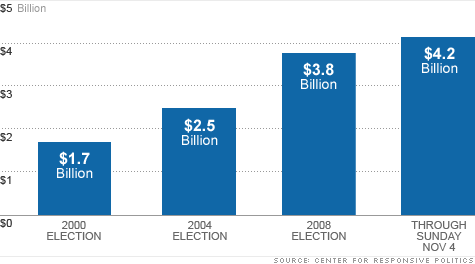
CNN Money used the above graphic in their feature, which called the 2012 election the priciest to date, with a $4.2 billion dollar price-tag, with some time left to spend.  The numbers are likely to only get bigger if super PACs continue to hold sway in American politics.

The Solution:

Because of the Supreme Court's Citizen's United decision, as well as the continuation of the Electoral College, it will likely require some sort of constitutional reform in order to get rid of Super PACs and the electoral strategies that currently exist.  A constitutional amendment that bans such groups, as well as establishing the general framework for fair and free elections without large amounts of outside cash is necessary to ensure that our version of democracy can exist long into the future. Getting rid of the Electoral College would also ensure that instead of spending time and money in only a few states, national candidates would have to have a wide ranging base all over the country to win the popular vote.

Monday, November 5, 2012

Please Vote This Election

In the election, it is vitally important that all eligible voters participate in the democratic process.  In this election, and in all elections, please make sure that your voice is heard, and no matter who you support, exercise your right and duty to vote.

Even though the voter turnout has risen in recent elections, it is still at historically lower proportions.  We need our citizens to take an active role and participate, especially the young people who are less likely to vote. In order to prepare for the important decisions regarding our future, we need everyone we can to help decide our new elected officials.


Tuesday, September 11, 2012

New Voter ID Laws Jeopardize Individual Rights

The new voter identification laws, pushed by conservative legislatures in states around the country are severely limiting one of the most basic constitutional protected rights for all citizens above the age of 18: the right to cast votes in elections.  This right is in serious jeopardy as ID laws have become the vogue.  The laws are proposed under the proposition that it would limit the amount of voter fraud and thus lead to more accurate voting, but this is simply not true.

Yes, this process can lead to lower voter fraud, but voter fraud is not the problem.  According to News21 voting rights database, the number of voter identification fraud in elections in all 50 states since 2000 equal a mere 10.  Given that during that span 146 million votes were cast, resulting in false identification affecting an alleged .000007% of all votes cast, the assertion that voter ID fraud is a problem is simply a nonstarter.

However, this does severely limit the ability of people to vote.  By some estimates, around 9% of currently legal voters in Pennsylvania will not be able to vote because they do not have a government issued ID.  But Pennsylvania is just one state.  Four others have similar laws (Indiana, Tennessee, Georgia, and Kansas) and 12 more have other requirements for presenting photo ID. Strict voter ID policies limit the amount of votes cast while trying to solve a nonexistent problem.  


Tuesday, August 21, 2012

Illogical Electoral Math

Consider the following:

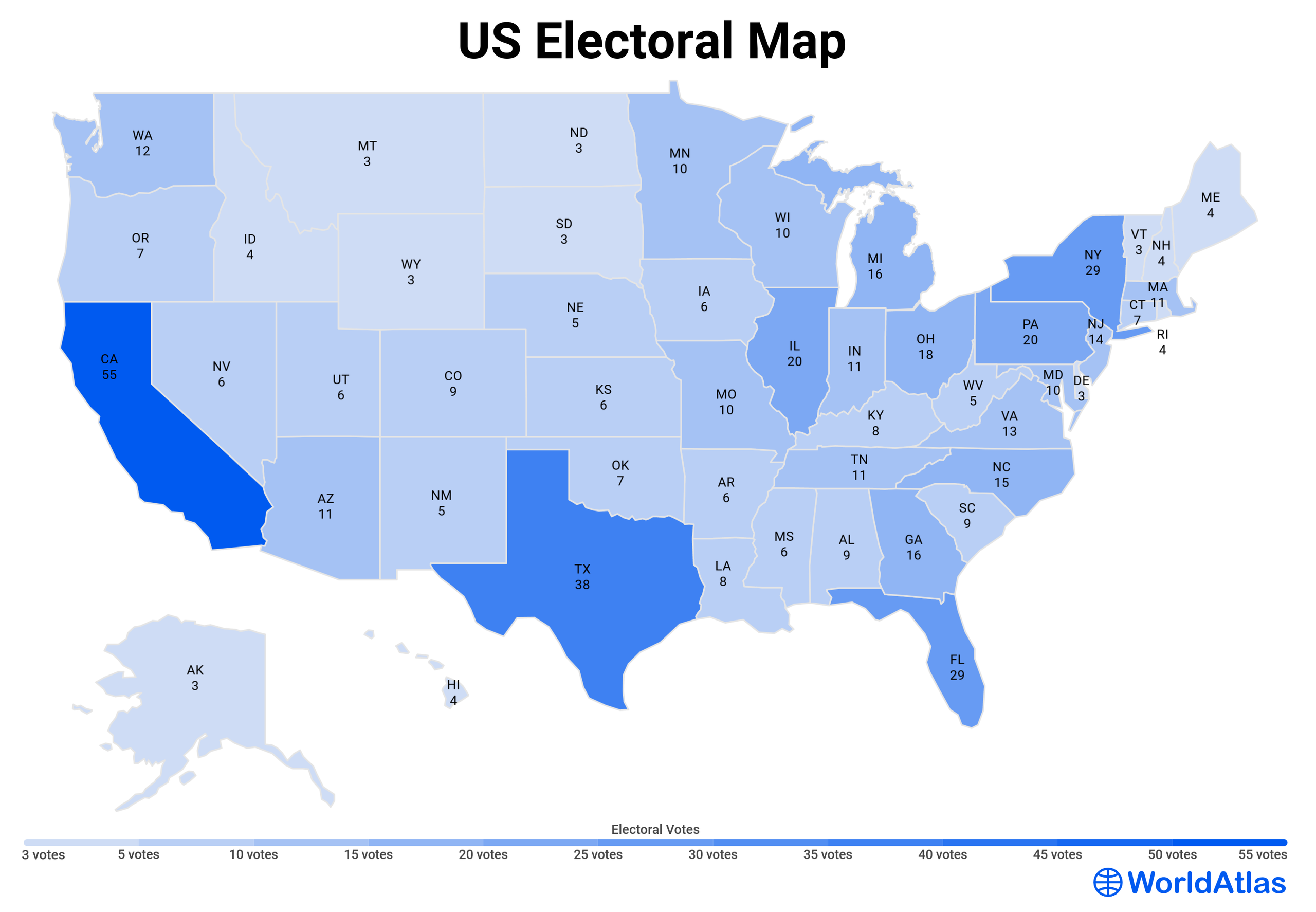
Say, as a hypothetical, that candidate X wins the state of California by only 1,000 votes.  California is the nation's largest state, so it accordingly has the most electoral votes, in this case 55.  Yet if Candidate X doesn't have a very good ground game in some other state(s), for example, New York, Massachusetts, and North Carolina, they could very well lose in a landslide to another candidate, say candidate Y, albeit only in those states.  However, if we add up the electoral votes in the 3 states candidate X lost big in we get (29+11+15) = 55 electoral votes.


That means, even though candidate X lost big to candidate Yin the popular vote over these 4 states, perhaps by hundreds of thousands of votes, the net electoral college loss is zero.  This situation is unlikely to happen, but far from impossible.  The way the electoral college is set up means that instead of trying to increase voter turnout everywhere they can, candidates concentrate on big swing states to help them get over the magic number of 270 electoral votes, the amount needed for a majority.  The victory in California gave candidate X over 20% of that total.  This math works accords other states as well.  Small wins in larger states can outweigh huge losses in small ones, even if the margin of victory is as small as 1 vote.

Do you want to sit on the sidelines while only a few states really vote for president?

Sunday, July 1, 2012

More Efficient Governance

The bureaucratic United States Government must undergo an evolution.  This is no longer the time to be a big, slow, thundering giant in the world.  In order to better serve its citizens, the United States government must be fast and efficient, delivering the needs of its people more rapidly.  Globalization has changed our world to where it is no longer the largest, most powerful countries that win.  Now, efficiency, speed, and quality are rewarded in the world markets.  The government can harness to power of the internet to speed up services that have taken nearly forever previously.  Why stand in line so long at the DMV or other local government agency when you can do it at home on your computer?  Why must government projects take so long to attain approval and begin work?  By utilizing current and future technologies, we can create a more efficient government in our country.

For reference, here is a breakdown of how the Federal Government spends its money:


Harnessing Creativity

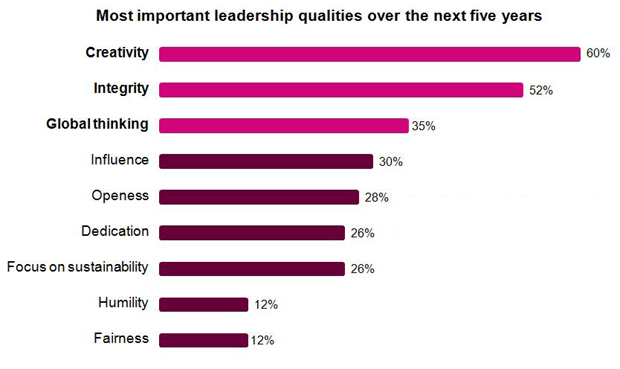
In this new age following the Cold War, it is imperative that the United States and other countries harness all the creative capital they have in their nations to enhance economic productivity.  In the US, we have the knowledge and the innovative spirit to solve numerous problems, if we only knew about it.  The US government and companies that operate here need to realize this and tap into the power of their own people.

A Fast Company poll

Saturday, May 19, 2012

Yes on Prop 29

California Proposition 29 proposes a $1.00 increase in taxes per pack of cigarettes.  The money from this new tax would go to funding cancer research, tobacco reduction programs, and law enforcement against the improper use of tobacco.

If it is passed at all.


The money of big tobacco is ardently against Prop 29, which will appear on California's June 5 ballot.  Phillip Morris and RJ Reynolds tobacco companies have committed over $30 million to stop this measure.  They know that this proposition has the potential to significantly reduce their profits.  If enacted, Prop 29 will help reduce incidences of smoking and improve cancer research.  We need funds for this now more than ever because of the fiscal crisis in California, making it impossible to use other state funds for Prop 29 target areas.  Therefore, we must pay for it in other ways.  In having the smokers themselves pay for it, we make cigarettes more expensive and fund health programs relating to tobacco use.

With the passage of Proposition 29, we can look forward to a healthier population.

We Need Fair Elections

With the Citizen's United v. Federal Election Commission, Corporations can give unlimited money to Super PACs.  In this election year, we are now seeing that this means a future of auctioning of elected positions.  Money wins elections, and with the unlimited spending of special interests groups, the people have much less of a say now in elections.  Those who run the most commercials and get the most press coverage are those with the most money, and they are more likely to win.  We need spending caps on elections to ensure that all candidates have a chance to compete for a spot in government.  We need the people's representatives in government, not the special interests' representatives.