Monday, April 8, 2013

The Importance of Manufacturing

As the United States begins its rebound from the recession, it is important to highlight how important the manufacturing industry is the the our nation's economy.  Manufacturing was one of the economic sectors that was hit hardest by the recession, and many of those jobs will either never or take a very long time to return.  


While there has been a significant increase of offshoring with manufacturing jobs, there is still a lot of work done here in America.  While some would argue that manufacturing is not as critical as it once was to warrant government support because of weak job creation numbers, these people miss a critical part of why we need manufacturing jobs in the United States.

large scale employment is not the main benefit of a strong manufacturing sector in our economy.  Support of manufacturing, specifically advanced manufacturing, will help the United States retain its status as a global hotspot for innovation and technological advancement.  Today, this is the main source of US competitiveness.  We have to realize that we cannot make everything anymore.  Manufacturing on large scales is much cheaper in east Asian countries.  Where we do have an edge, however, is the innovative spirit and technological know-how to come up with and create new technologies that will make world a better place.  

Today, the manufacturing sector makes up only around 11 percent of our nation's GDP.  As you can see from the graph above, the United States has experienced a constant downward trend in this statistic.  This is fairly constant with the rest of the world, on average.  However, despite it small share of GDP, according to the Brookings Institution, the manufacturing sector conducts 68 percent of research and development in the United States.  Brookings also notes that 22 percent of US manufacturers introduce new processes that increase productivity, as opposed to only 8 percent of non-manufacturers.  Additionally, manufacturing took up 60 percent of US exports despite its modest share in GDP.  

Although now a smaller part of our economy, the manufacturing sector is still very critical for the well being of our entire nation.

Sunday, March 31, 2013

Providing for an Innovation Based Economy

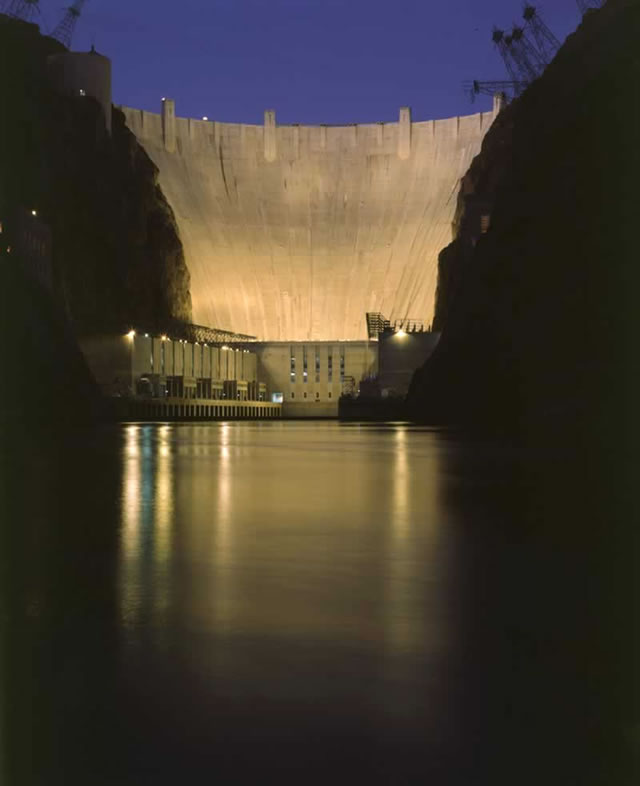
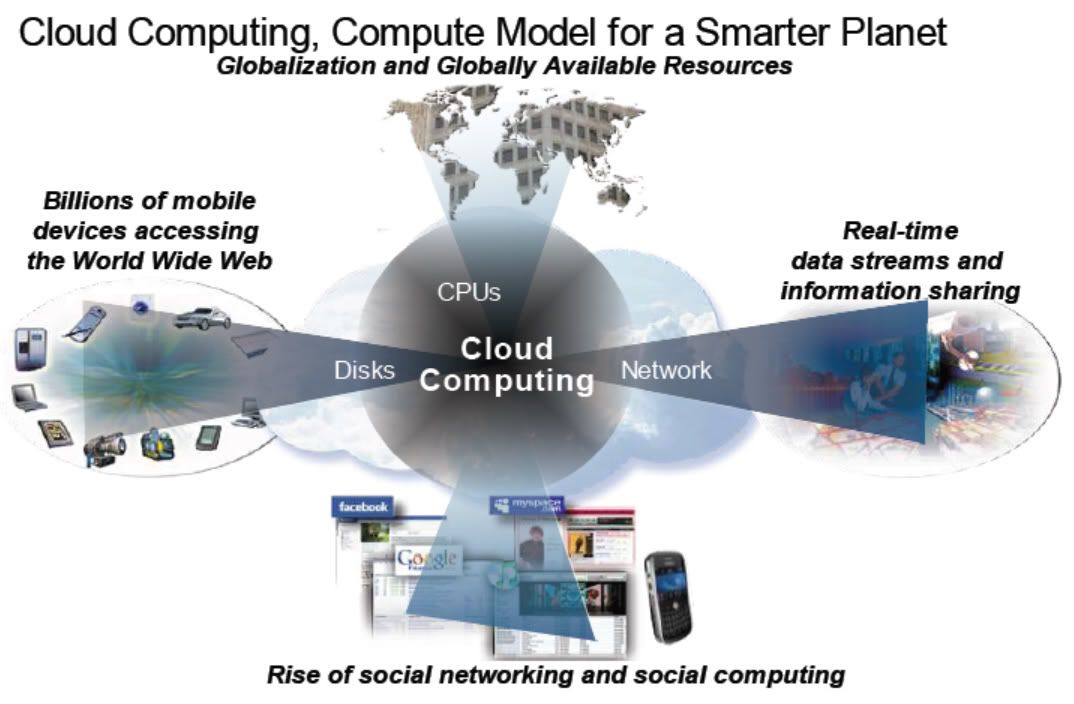
Just as our roads and bridges might need a boost, according to some Democrats, so too might our digital resources.  We often consider infrastructure to be just physical aspects of our society.  While highways, trains, dams, and other parts of our physical infrastructure are certainly critical to our daily lives, in the 21st century, we must also consider the critical nature of broadband, digital, mobile, and cloud based infrastructure as well.

Hoover Dam

Fast wireless and internet connections are critical to the growth and advancement of a high powered society such as the United States.  Because the world is "going mobile" it is critical that the United States keep up with the rest of the pack in supplying infrastructure for this to be possible.  Making sure America is at the cutting edge in cloud and mobile based technologies can promote innovation and cement the United State's status as the leading innovation hub in the world.  Enhancing this infrastructure means enhanced performance and enhanced performance means growth for this nation.

Local, State, and National governments, as well as private companies, need to take the lead to make faster internet and better data centers a reality.  According to an article in Wired Magazine, approximately 19 million American's can't subscribe to high speed internet, simply because they live in areas to expensive to serve.  Major companies have also had slow growth on upload speed improvements, the staple of cloud based computing.


Efficient, reliable, and rapid information transfer is critical in any economy, especially one that operates on a global scale.  This issue is critical to many other problems we face in this country, namely in health, national security, business, and education.

We need high speed internet access for most people, if not everyone, in this nation.  We are one of the most innovative countries in the world.  We can find a way.  The improvements made could help the economic production of this country enormously.  The first step in creating an economy with a strong innovation backbone is to improve our digital infrastructure for the future.

Thursday, January 24, 2013

Monday, January 21, 2013

Fiscal Conservatism

Its quite true that the United States government and indeed many governments are spending simply too much money these days.  What both parties do not understand is that they are both to blame.

We need serious entitlement reform.  We also need to make sure that we aren't spending so much money on foreign wars.  A huge amount of money could be saved by engaging in serious entitlement reform and increasing the efficiency of how the military-industrial complex uses its money.


Sunday, January 20, 2013

True Conservatism

We could use some true conservatism on the part of the Republican parties these days, and with a radical change to be more conservative, the GOP might gain some votes.

Being a conservative means thinking before acting.  It means conserving our resources-monetary and environmentally.  Spending less money and eliminating waste when possible is a very smart thing to do in government, though many "conservatives" are still content to spend on foreign wars and on pork in their districts.


Being a conservative also means conserving the environment.  Making sure through careful stewardship that our natural resources and parks are still there for our children.


Wednesday, January 9, 2013

Education Reform

As we make several posts on education reform, we'd like to share some very informative videos and articles that share interesting and different perspectives on education.  These varying perspectives are essential in revolutionizing our education system and adapting it for the 21st century.  Today, we'll share some clips of Salman Khan the man who founded Khan Academy.


Posted by ReasonTV, Khan talks about education reform in our country and how we can restructure the education system.  Early on, he advocates paying teachers more, establishing teaching as a profession on par of highly-trained doctors.  He feels the country needs to change to dynamic in the classroom and the teaching profession.

Below is a nice 60 Minutes piece complied by CBS.  It details the specifics of Khan Academy and how it can change education.


By creating videos such as this, Khan is effectively using technology to further education.  While technology used ineffectively can certainly stall student learning, there are many situations when technology can prove effective.  This is one of those cases.

Additionally, here is an interesting video put together by edutopia with more information on Khan and his creation, as well as his views on how it can be used.


Tuesday, January 8, 2013

Education Reform: The Problem

As many education reform proponents say, the difference between a good teacher and a bad teacher is vast.  A fantastic teacher can cover loads of material and inspire kids to become world leaders, while bad teachers can bring down an entire class, causing students to be ill-prepared for their ongoing education.  Eric Hanushek, a Stanford economist, contends that on average, good teachers cover a year and a half's worth of material as opposed to half a year for bad teachers.  This is one whole year's difference, and when tabulated cumulatively, can result in huge gaps in learning.

The problem then, is to find ways to get good teachers.  This is obviously easier said than done.  It is often not apparent that a bad teacher is bad until the teacher is already behind in the material.  Test scores can be used to track teachers, but it requires large sample sizes, with scores taken over many years, to get anything close to a clear picture of teacher performance.  The thing is, we want a way to quantify teacher success when there may not really be one.  A teacher that inspires his or her students to join a science summer camp would not have a measurable change in their student test score performance.  Good teachers also have intangibles, which are equally if not more important than testing performance.  Not having a clear way to distinguish a good teacher from a bad one is just part of the problem of our education sector.

If a teacher is considered bad, it is not always straightforward on how to get rid of them.  While some schools can certainly get rid of teachers, at others it is harder.  Powerful teaching unions, along with the use of tenure, have often been barriers to the removal of bad teachers, preventing better ones from being hired.

Money earmarked for education is also not always well spent.  Studies show that spending money on good teachers is more beneficial than classroom size changes.  This is a small example, but an example nonetheless of a situation where schools and educators must be aware of the economic impact of schooling.  Education is perhaps one of the most important services the government provides. We need to make sure that it is fiscally responsible in a way that it can continue.

Sunday, January 6, 2013

Fiscal Cliff Deal

While a deal has been reached in the fiscal cliff saga, the result is a disappointment. There was no grand bargain, which was unfortunate, though grand bargains are likely going to be hard to come by in the near future.  The deal basically kicks the can down the road, meaning congress will have to deal with the situation later, or kick the can further away.  Remember, the fiscal cliff was a creation of congress that delayed tough decisions.  This strategy has been the new norm for any debt related debates, leading to a stagnant reform effort.


Monday, December 17, 2012

President Obama's Address in Connecticut

In the midst of a horrific tragedy, we feel it is important to concentrate on the events that have happened in Connecticut.  Here are the President"s remarks: